Why We Value Things We Work Hard For and Twelve Hours to Trolltunga
June 2023, Norway, the parking lot below Trolltunga. I had brought my mom and my sister here after a Rammstein concert in Denmark. The free shuttle up had left at noon, the next one was at three, and on foot, people said, it was about three hours. So we walked, with a bottle of water and a bag of nuts, past people carrying tents and trekking poles, and we got back to the car at one in the morning.
We value things we work hard for because the effort becomes part of the value: whatever you pay along the way, your brain credits to the result, and the more the road cost you, the more what you got is worth to you. Psychologists call this the effort paradox. We avoid effort, yet we value what we had to work for more highly, and hardship we go through together bonds people more strongly.
Easy isn't bad. It just leaves no trace, and in my experience you also remember the hard things longer. Every summit that stayed with me had an adventure on the way up, and the ones I climbed easily I barely remember. I've done sixteen mountain treks and more than twenty summits, and below is my answer to why this happens: what the research says, where hardship ends and stupidity begins, and how to choose hard things that are worth it.
Why hard things are worth it: my Trolltunga story
Trolltunga, the Troll's Tongue, is a rock ledge about 700 meters above Lake Ringedalsvatnet, and almost anyone who has ever scrolled through photos of Norway has seen it. My mom is a Rammstein fan. For New Year's I gave her and my sister concert tickets, they picked Denmark, and in June I flew in to meet them and drive them around Europe, right in time for my mom's birthday. Since we were already in Denmark and I had a car, I said, let's pop over to Norway, I've dreamed of seeing Trolltunga for years.
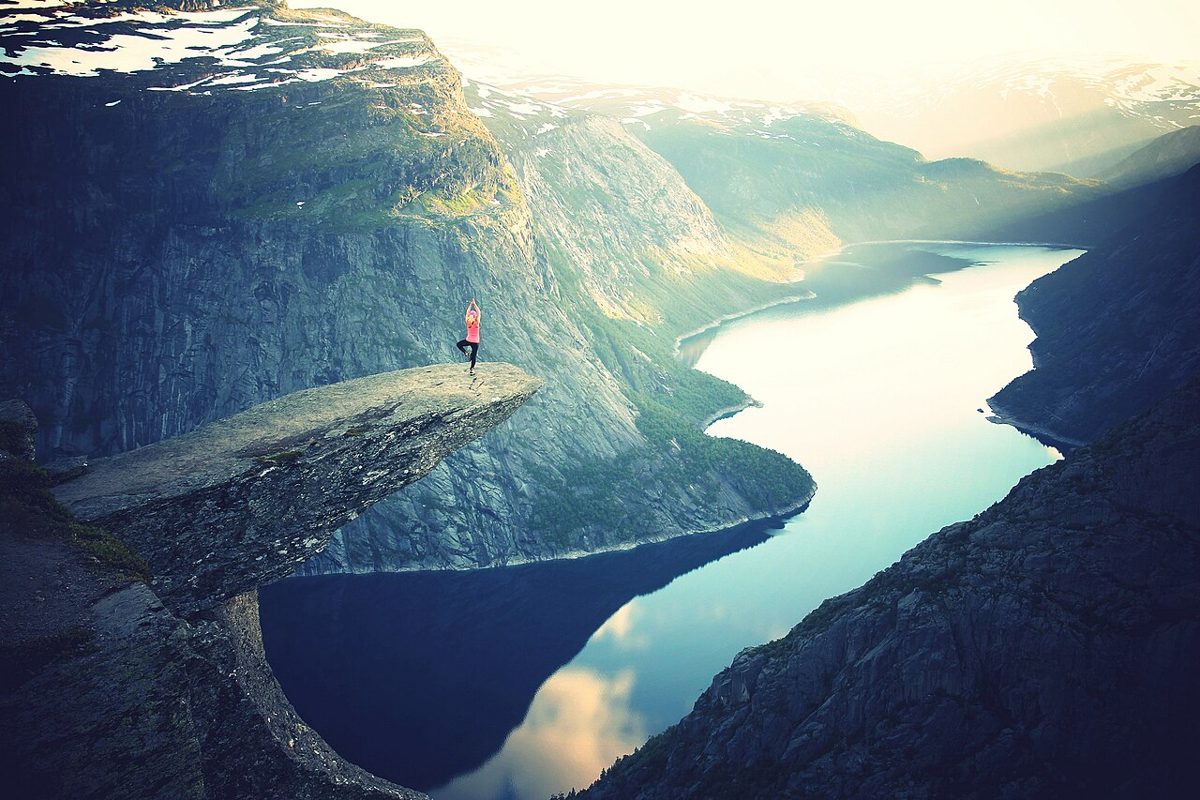 Trolltunga, Norway
At the bottom there's a big parking lot, a mountain road and a trail. I asked how long the climb was. About three hours, they said, or take the free shuttle, which we had just missed. Wait three hours or walk three hours, and we decided: "Okay, let's walk." Me with a watch, a bottle of water and some nuts, that was all the gear we had.
We climbed for three hours, and then it turned out we had to keep going across a plateau, and I started to notice that everyone passing us had backpacks, tents and trekking poles. We didn't think much and kept going, and it turned out the tongue itself was still about seven hours away. We got there around six or seven in the evening, took our photos, and now we had to go back. We were down by one in the morning, and thank God June nights in Norway are white, it never really gets dark. It was a huge adventure, the three of us f\*cking marching in sneakers across snow on empty Norwegian slopes, long after everyone else had gone home, because they all set off at seven in the morning and we only decided to climb at one in the afternoon.
And that's the story. If we had been prepared, I probably wouldn't remember how we walked, laughed, how I kept stopping to film us with the drone. Most tourist spots are an easy route: you get out of the car, take a photo, drive off, and a year later you can't remember which year you were there. This walk in the mountains, with no preparation and nothing, I'm sure my mom and sister remember as well as I do. Since then I love it when someone in a new country tells me a summit takes fifteen hours. I'm like: let's go, we leave now.
It wasn't the first time. In January 2018 in Sri Lanka I rode 320 kilometers on a motorbike, started up Adam's Peak at two in the morning, climbed 5,500 steps for three and a half hours to catch the sunrise, then spent two more hours going down on shaking legs, 31 hours without sleep in total. Under the photo from the top I wrote: "Adam's Peak. I will remember you." And I do.
The effort paradox: why we appreciate things more when we earn them
There's a scientific name for this. In 2018 psychologists Michael Inzlicht, Amitai Shenhav and Christopher Olivola described the effort paradox in Trends in Cognitive Sciences: effort is experienced as a cost and at the same time adds value. By default we save energy, but hard work makes the result more valuable, and sometimes effort becomes its own reward. One of their examples is mountaineers who value a climb because it's hard. The paper also covers the IKEA effect, where furniture you assembled yourself feels more valuable than the same piece assembled by someone else, and people will pay more for it, but only if the assembly worked, plus a classic experiment about joining a group.
That experiment was run back in 1959 by Elliot Aronson and Judson Mills. Female students went through a severe or a mild "initiation" to join a discussion group (in the severe version they had to read embarrassing words out loud to the experimenter), and then everyone listened to the same boring recording of that group's discussion. Those who paid more to get in rated the group noticeably higher. Same group, same conversation, the only difference was the price of entry. This experiment has a flip side: the price of entry makes us overrate even empty things. We defend what we paid for even when it isn't worth it, so hardship on its own guarantees nothing.
I've seen the same thing in my work for years. When someone has gone through something uncomfortable, they defend the result, talk about it, come back to it, while what came for free almost never becomes a story you want to tell. I wrote separately about how this works with money and why clients don't value free advice. Here I'm talking about a different currency you pay in: time, energy and experience.
Why easy wins don't feel good: the immortality cheat code
I used to play a lot of video games, and in my webinars I explain one mechanic through them. Every level ends with a boss, and to beat it you need the skills you've been building all level long. Now imagine you type in a cheat code for immortality and infinite money. The first ten minutes are fun, then it gets really boring and you don't want to play anymore. Developers deliberately make a game hard enough to be interesting but not so hard that you quit, and in city builders like SimCity people build a perfect city and then send a meteor or a tornado at it themselves, because a game without problems is no fun.
Life works the same way. Lots of people want a cheat code for life, no fear and no effort, but when that's what they get, life goes flat. Of all the businesses and projects I've built, the incredible high always came when I nearly died getting to the top.
You can see it clearly with travel. In 2019 I wrote a post about what travelers don't talk about. I used to be as excited as a kid about my first plane ticket, glued to the window, and then planes became like buses, airports blurred together, and every new city surprised me a little less. Comfort eats impressions. When everything you see comes equally easy, your brain has nothing to hold on to, and that's why easy wins don't feel good: there's no contrast in them.
Does shared pain bring people closer?
There's a second layer I only understood later. My mom, my sister and I walked that route together, and I'm sure they remember that walk as well as I do.
In 2014 Brock Bastian, Jolanda Jetten and Laura Ferris tested this. Groups of students held their hands in ice water, did wall squats or ate hot chili peppers, while control groups did similar tasks without pain (warm water, balancing on one leg). Those who suffered together later felt more bonded to the group and contributed more to the shared result in an economic game. These were strangers in a lab; with my family I tested it on myself.
Bastian put it this way: pain is a particularly powerful ingredient in bonding among those who share it. In 2020 a team of Chinese researchers repeated the experiment and clarified something important: the bond came from shared hardship, while pain each person endured on their own did not produce the effect in their study.
In December 2016 on Bali we celebrated Olya's birthday not at a dinner table but on Mount Batur, at 1,717 meters: leave at two in the morning, start climbing at four, at the top by ten past six. I climbed the rocky slopes with my child in my arms, my daughter fell asleep on the way and woke up at the top, right at sunrise. On a climb like that, besides the physical load, you start hearing your own mind. Either you pick the game "I'm tired" and walk in a bad mood, or you pick the game "what an amazing experience", and then your focus is somewhere else entirely. I, for one, start singing out loud.
Should you make life harder on purpose? Where hardship ends and stupidity begins
Let me argue with myself here, because the Trolltunga story is easy to read the wrong way. Going up there in sneakers, with one bottle of water and no headlamp, was luck, not bravery. Norway's official tourism site says the hike takes 10–12 hours and requires hiking boots, a headlamp and enough food, and Norwegian rescue teams bring unprepared tourists down from the mountains every year. White nights and good weather saved us. With fog, or in October, this story would have ended differently, and I wouldn't be telling it. Prepared, we would have walked the same twelve hours and, I think, remembered them just as well. The road and the fact that we walked it together made the story, not the sneakers.
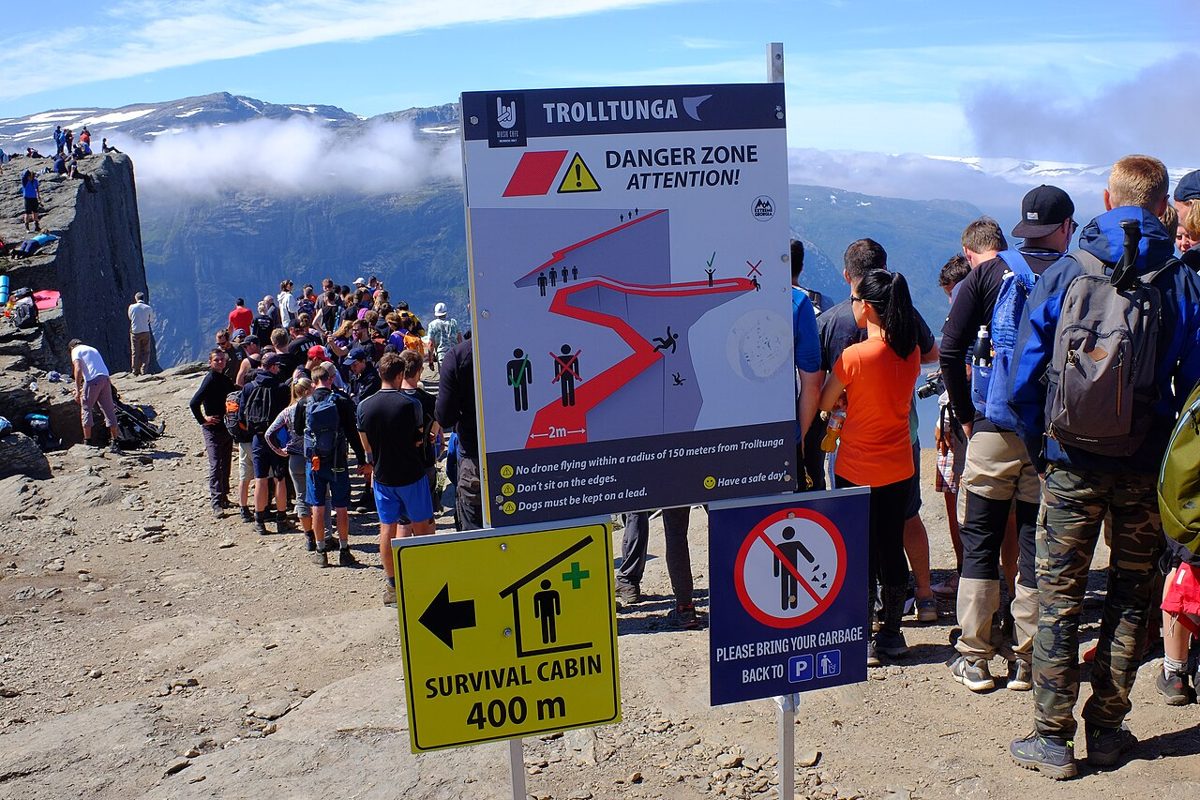 Danger zone
So the rule isn't "the harder, the better." Value comes from hardship you chose yourself, that has a summit, and that's within your reach at the limit, not beyond it. Like in a game: the boss should be hard but beatable. Suffering for the sake of suffering is worth nothing, and I consider the belief that "money only comes through suffering" one of the most harmful there is.
| Hardship worth it | Hardship that's just stupid | |
|---|---|---|
| Summit | yes, you know what you're going for | no, suffering for its own sake |
| Who chose it | you did | debt, fear, "I have to" |
| Cost of a mistake | it'll be hard and funny | you might not come back |
| Level | at your limit | beyond your limit |
| For whom | something that matters to you | a checkbox for others |
There's one more trap. In 2011 marketing researchers Anat Keinan and Ran Kivetz showed that people choose unusual and even knowingly less pleasant experiences, like a night in an ice hotel, to check a box on their "experiential CV" and feel their time wasn't wasted. I'm guilty of this too: "twenty summits" is a kind of CV as well. But I know from my own life that hardship for the sake of a checkbox quickly blends into all the other checkboxes, while hardship for something that truly matters to you stays. We didn't go for the photo: I had dreamed of seeing that place and wanted my mom to see it.
The most valuable things are hard in business too
In business I see the same mechanic, just with different summits. As I said, the incredible high was always where I nearly died getting there. And the other way around: if something comes easy to you, that doesn't mean it's worthless. You already paid for that ease with years, and charging for it is fine. I wrote about that in why you feel ashamed to charge for what comes easy.
But it's important not to confuse chosen hardship with imposed hardship. From 2016 to 2018 I was building GrafSpace, a coworking space with a 200-seat hall in Odesa. One evening I pawned my car so the doors could open the next morning, and the whole thing ended with almost half a million dollars of debt. I've told that story in detail. It was incredibly hard, but I felt nothing valuable in that hardship until I realized I was dragging it out of "I have to," not "I choose to." I wasn't playing the game, the game was playing me. Hardship you carry out of debt and fear doesn't become a summit, it just wears you down. In my webinars I often say that today's grief is tomorrow's great story for a talk or a book, but it only becomes great when you decide for yourself what you take from it.
In 2020 I wrote a line I still stand by: for me, life is a collection of memories, and you should live so that movies feel boring, because your own life is more interesting. When every day is the same, home, work, phone, sleep, no memories form, and life rushes past.
How to choose hard things that are worth it: 7 steps
- Look for a summit, not for pain. First, name what you're going for: a place, a result, a person you want to go through it with. Hardship without a summit is just suffering.
- Go one level up, not three. A good challenge is like a boss in a game: beatable, but at your limit. If your ceiling right now is $1,200 a month, a summit of $3,600 is much closer to a game than a summit of $120,000.
- Check the cost of a mistake. Before you set out, ask yourself what happens in the worst case. If the answer is "it'll be hard and funny," go. If the answer is "I might not come back," don't go until you've closed that risk: route, turnaround time, gear, forecast, guide. "Hard and funny" is fine, "we got lucky" is not.
- Ask yourself: am I choosing this, or do I have to? Hardship you chose fills you up, hardship out of "I have to" and fear wears you down. If you can't honestly say "I choose this," sort that out first, then climb.
- Don't buy cheat codes where the path matters. Ready-made solutions and "just do it for me" save time, and that's fine for routine. But where you want to grow and remember, keep the climb on foot for yourself, skipping the ready answer, not the gear and the safety net.
- Go together. Hardship shared by two people or a team bonds them. Invite the people you want to be closer to into something hard: your parents, your partner, your team, and on the climb pick the game "amazing experience," not "I'm tired."
- Write the story down while it's fresh. On the evening after a hard day, write down three details: what was hardest, what someone next to you said, what you felt at the top. A year from now, that's exactly what it was all for.
We could have set off like everyone else at seven in the morning, with backpacks and poles, walked on schedule and come back before dark, and then I'd have one more photo from Trolltunga. Instead I have twelve hours in sneakers across snow, an empty trail, and my mom and sister next to me.
Frequently asked questions
Why do we appreciate things more when we earn them?
Because the effort becomes part of the value. Psychologists call it the effort paradox: we avoid unnecessary effort, yet rate what we invested in more highly. There is a flip side: the price of entry makes us overrate even empty things, so hardship on its own guarantees nothing.
What is the effort paradox?
It's an idea Michael Inzlicht and colleagues described in 2018: effort is experienced as a cost and at the same time adds value. We try to save energy, but we value results we had to work for more, and sometimes the effort itself becomes the reward, as with mountaineers.
Why does doing hard things feel good?
Because there is contrast and a story in it. A result that came without effort has nothing to hold on to, like a game with an immortality cheat code: fun for ten minutes, then boring. A good game, like a good goal, is hard but beatable.
Does shared pain bring people closer?
In Brock Bastian's 2014 experiments, people who endured unpleasant tasks together later felt more bonded and cooperated more. In a 2020 replication, only shared hardship produced the effect; pain each person endured alone did not.
Should you make life harder on purpose?
No. Value comes from hardship you chose yourself, with a goal, within reach at your limit. Suffering for its own sake, hardship out of "I have to" and risk without preparation add nothing. Easy is fine too, it just rarely becomes a story you remember ten years later.

Next step — pick a format
A 5-day game for experts — from zero to your first $1,500
Start free →5 days — how a practitioner and entrepreneur puts AI to work
Learn more →Build a producer team around an expert in 30 days
Learn more →A private community of entrepreneurs — growth without the operational grind
Learn more →A summit worth climbing
Book a session: we'll find your next summit one level up and check whether you're choosing it or dragging it out of "I have to."
Apply