"They're Shutting Us Down If You Don't Pay Today." The Story of a Half-Million-Dollar Debt I Took On Alone
The call came at seven in the evening, right after the crew had gone home for the day, when the parking lot had that particular silence a construction site gets after a shift ends, the smell of fresh paint and sawdust still drifting out through the open doors of the hall. Igor Graf stood at the entrance to the nearly finished space where his most ambitious project yet, GrafSpace, was set to open in three weeks: a coworking hub with a two-hundred-seat conference hall, a café, and a school teaching entrepreneurship to kids. The building manager was on the line, his voice flat, no emotion in it. Rent hadn't been paid in three months, he said. Tomorrow morning the doors would stay locked until there was money.
Igor called everyone he could reach that night. He found someone willing to take his car as collateral, the same car he'd bought with the first real money he'd made in business. The car was worth forty thousand dollars; at five percent a month interest, the man handed him fifteen. Igor took the cash, paid off the rent, and opened the doors the next morning like nothing had happened.
By then he barely understood what any of it was for anymore. Not the money, it seemed. More the fear that someone might say he couldn't handle it. He'd put it into one line later: I wasn't the one playing the game — the game was playing me.
A few months later GrafSpace would close, and for the first time in his life Igor would hear the word "fraud" aimed at him. The mistake behind it would cost him almost half a million dollars, part of which he's still paying off today. This isn't a story about how to run a business right — in twenty years as an entrepreneur, Igor has made far more ordinary mistakes than this one. It's a story about the difference between "I owe" and "I choose," and about what nearly cost him his sanity before he saw that difference clearly.
The Best Hall in Town, and a Market That Didn't Want It
In 2016, Igor decided to build a space unlike anything the city had seen. Years of speaking at other people's venues had taught him exactly what those venues lacked. Movable walls, so a hundred-seat hall could shrink to twenty in minutes if fewer people showed up than expected. His own video studio built for livestreaming, back in 2016, when almost nobody in Ukraine was thinking about podcasts yet. A separate café, a kids' entrepreneurship school, a two-hundred-seat conference hall. The lease alone, six hundred square meters in the center of Odesa, ran twelve thousand dollars a month.
He raised the launch money the way that had worked once before, a year earlier, on a project called GrafInvest: he offered his subscribers a stake. That time he'd raised forty-seven thousand dollars, turned a profit within six months, and paid dividends on schedule. GrafSpace needed an order of magnitude more, roughly three hundred thousand dollars for rent, renovation, launch, and advertising. On day one of the raise, about a hundred thousand came in.
That's where the first mistake happened. Igor didn't wait for the full amount. He started renovations with what he had, telling himself the rest would come in along the way. He had the reputation. People would believe in him. But renovation starts a clock that doesn't wait: rent comes due every month whether or not you've raised the money. Within a few months, payroll alone was eating twenty thousand dollars, and what they had to show for it was a methodology nobody on the team could explain in plain words.
Mistake #1. Started spending before raising the full amount.
Lesson 1. If a project runs on rent and payroll from day one, you need all the money upfront, not "as it comes." The cash gap grows faster than the next installment can close it.
When You're the One Who Owes, Not Them
By the fall of 2017, GrafSpace had racked up three months of unpaid rent. That call threatening to lock the doors wasn't the only one, just the loudest. Igor was carrying the company alone: sourcing investors himself, negotiating with the landlord himself, managing a team that couldn't keep up, himself. He'd describe it later this way: I carried everything on my own. I couldn't trust anyone with it, because this was a reputation story and the investors were my own subscribers.
That's where Igor made a far more expensive mistake. Once it was clear the project wasn't going to make it, he could have done what happens with real investments: the risk gets shared, some people lose part of what they put in, some don't. That's how any venture deal works. Instead he told his subscribers he was closing the project but would personally repay everyone's investment out of his own pocket. On paper, it had been called risk investment. In practice, it became a personal loan that he alone was on the hook for, and he took on other people's losses as if that could prove something. He didn't understand yet what he'd only be able to put into words years later: when you take on someone else's financial risk, you also take on their karma — the lessons that were supposed to be theirs to learn, not yours.
Mistake #2. Took on someone else's risk entirely, just to stay the hero in his own eyes.
Lesson 2. An investment is called an investment because the risk is shared. Cover other people's losses alone and you're just strapping their burden to your own back, and you'll be stuck under it for years. That's the same principle behind a piece I wrote called Nobody Owes Anybody Anything: the difference between obligation and choice changes everything.
The reckoning came fast. In February 2018, GrafSpace closed with a debt of three hundred eighty thousand dollars owed to investors, not counting the pawned car, the bank obligations, and the growing interest. Three months later, Igor would write about it himself, in a post that opened with the words: "My last mistake cost me $500,000, and it'll take me another year to climb out of it." He'd be off by exactly one word: it wouldn't take a year to climb out. It would take years.
That's when he first heard a word aimed at him that he never expected. Fraud. Fake negative reviews started showing up online, dozens of them, then close to three hundred, all reading like they'd been copied from the same template. Search his name and they'd float straight to the top. "I had no framework in my head for why anyone would even call me that," Igor remembers. "I thought I'd done the right thing." He'd later call the year after GrafSpace closed a kind of psychological hell he couldn't find his way out of.
A Wardrobe in the Middle of the Room
While his reputation cracked, ordinary life kept going in a small rented apartment in Kyiv, one bedroom for three: Igor, his wife, and their young daughter. To give the child her own space, they put a wardrobe in the middle of the room to act as a wall. Igor took the narrow balcony for himself, about five feet wide, just enough room to wedge in a desk from Ukraine's answer to Ikea. That's where he worked, where he filmed stories for his subscribers, even though what waited outside the window was an ordinary balcony with a laundry line, not the yellow convertible from the life he'd already sold off.
He sold the three cars he had left, one by one, each sale plugging another hole. There was no income in March, none in April. In May he posted to his subscribers again: he needed fifteen thousand dollars at the same five percent to buy the pawned car back, and he'd pay it back later. They sent him thirty, almost double what he'd asked for. By June he was two thousand dollars in the red again. That fall he took whatever work he could find — side jobs, he calls them himself, half-joking — a one-page site built for a hundred dollars here, a landing page with a sales funnel there, anything to keep moving.
At one point his wife asked him directly: why not just run a normal business, since that clearly works for other people? Igor said no. He had no numbers to point to, nothing concrete to lean on, but he felt it: this was his path, and he needed to walk it to the end, even with the end nowhere in sight.
A Hundred People Isn't a Number, It's a Hundred People
In October 2017, his close friend Sergey Motovilets called. They'd met years earlier at one of Igor's talks. Sergey had a spare ticket to Brendon Burchard's annual summit in San Francisco, freed up by someone who couldn't make the trip. The ticket cost seven hundred dollars, money Igor didn't have either. In a single day he raised it by building five landing pages at a hundred dollars each for random clients, then found a route through Frankfurt that came in three hundred fifty dollars cheaper than a direct flight. For three days in America he ate nothing but fast food, cutting every corner he could, and came home with a case of gastritis for his trouble. He slept on an air mattress in the hallway at the place where Sergey was staying, he'd talked the host into twenty-five dollars a night instead of a hundred.
At that conference he caught the insight he'd later call the turning point. Brendon Burchard pulled the first four rows out of a room of a thousand people, had them stand and turn to face everyone else. "That's a hundred people," he said. "That's a hundred likes. At what point did you stop valuing each one on its own?" Igor sat there and realized GrafSpace had been built on exactly the opposite logic: he'd measured the project by scale, not by people, chasing proof for himself and the market instead of a result for one person with a name.
Mistake #3. Built a business to prove something and chase scale, not for the people who believed in it.
Lesson 3. A business built on ego collapses at its first real test, because it has nothing to hold onto but your pride. A business built for specific people holds even when you have nothing left. It's the same divide I wrote about at length in Millionaire Mindset: scale is worth nothing if there's no person with a name behind it.
A Playbook for Paying Down Debt Without Losing Yourself
Out of this whole story, Igor built a system he still uses every time a business stumbles, since failures only become a step toward future success when you take them apart instead of hiding them. Five steps, none of which he knew back in 2017.
- Name the exact number. Down to the last dollar, interest and penalties included. A blurry number reads to the brain as infinite, and your hands go slack. Once it's named, you can actually work with it.
- Separate your money from other people's. An investment isn't the same as a personal loan. If someone shared the risk with you, don't turn it into a personal debt out of guilt, or you'll be hauling someone else's responsibility around for decades.
- Build a payment order. Igor paid in this sequence: staff salaries first, then clients and contractors, then the people who'd personally backed him at the worst moment, and only then, in the order they'd signed on, the remaining investors. Whoever tries to pay everyone at once ends up paying no one properly.
- Never hand over more than half your income. A rule Igor set for himself and still follows: no more than fifty percent of what he earns goes toward the debt. The rest keeps him living and building, because a person with nothing left for life and growth eventually stops earning altogether. Igor likes to compare it to Roald Amundsen, the first man to reach the South Pole: he covered exactly thirty kilometers a day, never more, even in good weather, and stopped on schedule even when he could have pushed further. His rival Robert Scott squeezed everything out of every day and died in the snow. A disciplined fifty percent outlasts a heroic all-in sprint.
- Find the first dollars in a new lane within a week. After GrafSpace closed, Igor tested new directions with fast launches instead of multi-page business plans. One attempt brought in two thousand dollars on day one. First money from a real client proves a working model faster than any pitch deck.
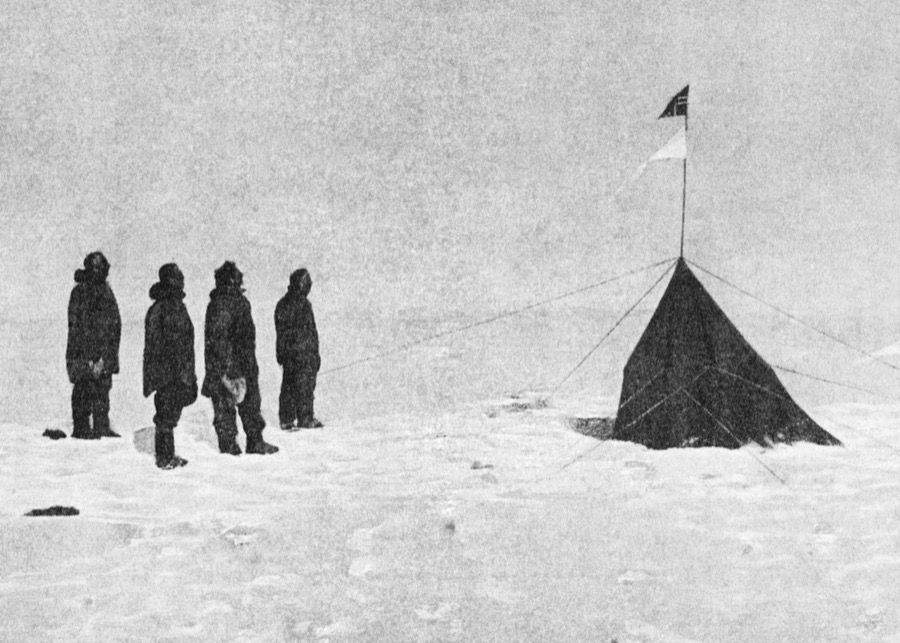 SOUTH POLE · DECEMBER 1911
Years later, Igor has paid back more than half of the four hundred seventy-seven thousand dollars, to the very people whose calls once forced him to sell his cars one after another. He still pays part of it every month, and talks about it openly now, without the shame he used to demand of himself back in 2017. He doesn't remember that evening call about the locked doors as a moment of defeat. He remembers it as the moment he finally understood: you can play the hero once, on someone else's dime. Or you can be the person who chooses their own debt. The second one turned out to be far harder. And far more honest.
Frequently Asked Questions
How do you tell the difference between "I owe" and "I choose" when it comes to debt?
"I owe" keeps you in the position of the guilty party, easy to manipulate through guilt. "I choose" turns the same money into a decision you're accountable for, without the guilt. The difference isn't the amount, it's the psychological position you're paying from.
Why shouldn't you take on someone else's investment risk entirely?
Because an investment by definition means shared risk, otherwise it's not an investment, it's a personal loan. Absorbing someone else's losses doesn't save the relationship, it turns you into both their debtor and the one to blame, which opens the door to hate and accusations even when the intention was good.
What's the right way to pay off a large debt without destroying yourself?
Name the exact number, separate your money from other people's, build a payment order by priority — staff, then clients and contractors, then people who backed you personally, and only then investors — never hand over more than half your income, and find your first money in a new direction as fast as possible to prove the model works.
What do you do when a business can't pay back its investors?
First, lock in the exact number with all the interest, don't live with a fuzzy figure. Then separate what's genuinely a personal debt from what's, by nature, a shared investor risk. After that, build a payment order and follow it instead of trying to close everything at once.
How do you stay motivated paying off debt for years?
Never hand over more than half your income, keeping enough to live on and grow, or you'll eventually stop earning altogether. And keep reminding yourself that you don't owe, you choose to pay — it's the only position you can hold for years instead of months.

Choose your next step
5-day game for experts — from zero to first $1,500
Start free →5 days — how to use AI in practice as an expert and entrepreneur
Learn more →Practical program: from chaos to a managed client flow and stable income
Learn more →Closed international community — the environment where scale becomes a habit
Apply →Carrying a debt no one asked you to carry?
Join a community that works through business growth and the decisions that keep you stuck in the victim seat.
Learn more