How to Stop Giving Free Advice and Where a Client Really Begins
At six in the morning on June 30, 2020, I wrote in my Telegram channel: "Something got under my skin today." Then I explained why. I was teaching people almost every day, 95% of it for free, and "nobody values it anymore." Below that, in all caps, came the decision: "NO MORE FREE INTENSIVES." Back then I blamed people. Three years later I also cancelled free calls and free diagnostic sessions, this time without resentment, as a business decision. Here is what I learned in between.
To stop giving free advice, decide where free access to you ends and your work begins, and stop working with people who haven't decided anything as if they had. People don't value free things mostly because free attracts those who haven't made a decision yet. You owe them nothing, the question costs them nothing, so nothing in their life changes. Every time you hand out your attention to someone who hasn't paid, you set a precedent that this is okay, and the experience you paid for with years, money and pain loses its value.
Price works as a filter for intent and as the point where a prospect becomes a client. On its own it doesn't make people try harder. Researchers have tested this, and I'll show you what they found. What it does reliably is select the people who are already ready to change something.
I write as a practitioner: twenty years in business, fourteen years teaching entrepreneurs, more than 2,000 in-depth interviews.
Why people don't value free things: you create the precedent yourself
When we give attention to clients who haven't paid anything yet, we train a Pavlovian reflex in them: this is okay. Someone gets an hour of your time for a "thank you" once, twice, three times, and from then on it's the norm. That's where the habit almost every expert knows comes from: relatives and friends constantly take free consultations from us and then do nothing with what we said.
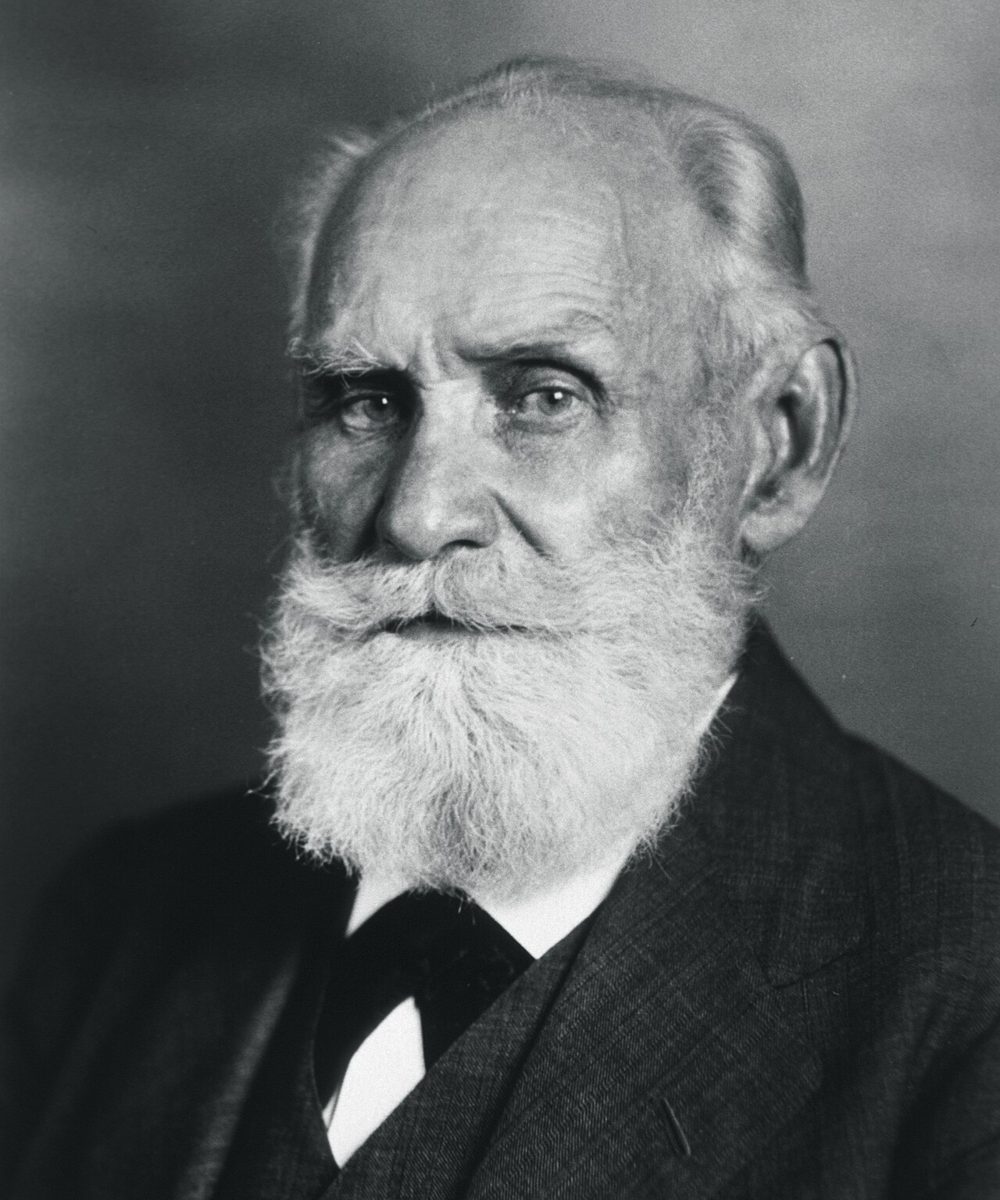 Ivan Pavlov, physiologist
I noticed this back in October 2013 and wrote on VK, the Russian social network, that "free advice" doesn't just fail to work, in the end nobody even tries to apply it. A month and a half later I announced ten free forty-minute consultations as a New Year's gift, and in the same post four spots in a month of work with me at about 70% off. A classic free-to-paid funnel, and back then I believed in it completely.
There is another mechanism I wrote about in detail in the piece on kitchen-table psychologists and responsibility: while you help as a friend, responsibility blurs on both sides, after all, it was free. As soon as there's a price, the relationship becomes commercial, and responsibility appears in it, the kind many experts unconsciously don't want to take on.
Do people value things more when they pay: what the research says
The most famous evidence comes from a theater. In 1985 psychologists Hal Arkes and Catherine Blumer worked with the Ohio University Theater, where season tickets were sold to random buyers at one of three prices: the full $15, or discounted to $13 or $8. Those who paid full price attended an average of 4.11 plays in the first half of the season, versus 3.32 and 3.29 for the discount groups. In the second half of the season the difference disappeared: money paid once doesn't hold people for long.
Then the myth cracks further. In 2010 economists Nava Ashraf, James Berry and Jesse Shapiro tested the same idea in Zambia with a water purification product sold door to door, and found no consistent evidence of a "paid for it, so I use it more" effect. What they did find matters more for us: price works as a filter. At a higher price the product is bought mainly by people who will actually use it. The filter has a downside, it also screens out some people who need the product, so some level of free access is still worth having.
And in the same year Jessica Cohen and Pascaline Dupas gave pregnant women in Kenya malaria bed nets at different prices, including for free, and the free nets were used no less than the paid ones. So in its pure form, "people don't value free things" is wrong. Here's how I read the data: a bed net only has to be hung over the bed, while a consultation works only if the person is ready to change something in their life. The more the result depends on the person's own decision, the more it matters who walks in, and the stronger the filter works.
I've seen something similar myself, on a small sample, so treat this as a practitioner's observation, not a study. Over thirteen years I tested the same hypothesis many times, hoping each time it would turn out differently. I took two friends into my club for free, on the deal "pay the fee later, once you get results," and neither lasted three weeks. I took three people with a first payment of $100–200, "show your intent now, pay the rest in a month," and all three dropped out in under a month, before the second payment was due. Among those who came in on the standard terms, exactly one person dropped out: the greenest one, with no experience, whom I'd decided to let in out of pity.
My conclusion at the time was an uncomfortable one: the amount defines the value of the intent and the scale of a person's pain or desire. A $100 commitment brings a person of matching scale. That doesn't make the free person a bad person. They simply haven't decided yet, and you've already started working as if they had.
Should I offer free consultations: who free attracts
What follows is an observation about buying behavior, not a judgment of people. Here's a fact we see all the time: poor people need more attention to make a buying decision, even when the purchase costs a dollar. A wealthy person needs less. Whether it's about intelligence, about the level of risk for them, or about the fact that people who started earning a lot have already been through this and figured out how things work, I don't know. A fact is a fact.
It looks like free attracts, first of all, the people for whom a decision is hardest, and they are the ones who need the most attention. Your best hours go to people who won't become clients for a long time. In 2023 I was getting 20 applications a day, I physically couldn't talk to everyone, and an hour spent on "getting to know each other" instead of solving a problem felt like an hour thrown away. I cancelled free calls and diagnostics and made the first session paid, I wrote about it in the piece on why it's awkward to charge for what comes easy. People started coming with specific requests, and the quality of the sessions went up.
The doctor, the waiting room and the shot: why free asks for no change
Where I come from, people are used to healthcare being nominally free, so roughly speaking nobody pays to see a general practitioner. Look at the line outside the office: the grandmothers sit there nonstop, because the visit means nothing, carries nothing with it and requires no change. Came, talked, left.
Many doctors tell the same story. A man comes in with bad joints and asks what to do. The doctor tactfully mentions excess weight, and if you translate that without the bedside manner, he's fat. The conversation goes like this:
— Can I just get some kind of shot so it stops hurting?
— The problem isn't your joints, it's the load on them. You need to walk.
— No, that doesn't work for me. Can you give me the shot?
— No, I won't.
— You're a bad doctor.
And he walked out.
Any free client, give or take, will on average behave the same way, plan for it. A person who hasn't decided to change asks for a shot whether they came in paid or free. Free entry just brings in more of those people, and with each of them you spend energy on a conversation that ends with "you're a bad doctor."
How to say no to friends asking for free advice
Many people think their expertise gets devalued because saying "no" is hard for them. The cause is elsewhere. A stranger won't walk up to Elon Musk and message him "tell me how to do this." Although, judging by the comments under celebrities' posts on some social networks, such unhinged people do exist, but on average, no. How much people ask of you for free is the boundary you've built.
With relatives and friends the rule is the same as with clients. If you want to give someone an hour of your time, give it, but honestly call it a gift and don't expect the advice to be used. If the person needs a result, move the conversation into a working format: "This is what I do professionally. Let me answer you as a specialist, let's sit down for a proper session." After my experiments I stopped letting even big entrepreneurs into my club without the full fee, and I make no exceptions for friends either: friends were exactly the two who left after three weeks.
How to charge friends and family without guilt
A separate word about guilt. Your experience didn't come out of thin air, it was paid for with years, money and pain. When you give it away as "just five minutes in my DMs," you devalue both yourself and the clients who paid full price for the same thing. A friend who pays you is not a lost friendship, it's a friend who decided to take your help seriously.
A client begins at the moment of payment
The relationship "business and client" begins at the moment of payment. That's when I, as a business, take on an obligation to you under a contract, I owe you a service, you gain rights in relation to me, and that's when I can give you my attention. Until a person has paid for a single service, I have no obligations to them.
I explain it with a house. Are we building a house together or not? Until I'm building you a house, we don't have a relationship, we have a conversation about a possible house. For free you get a certain level of access, and after that the decision is yours.
We're used to the illusion that a business must serve everyone who walks in. It doesn't have to. It can work on service quality so that everyone who comes into the store gets a cup of coffee, but that's already marketing, and a person holding that cup of coffee is still a prospect. We treat them politely and with respect, as a future client.
What to give for free and what only for money
One of the biggest illusions I see among experts is that people don't know what to do. They know. How to lose weight can be googled, a solution can be asked from ChatGPT. So give information away freely: content, articles, live streams, general principles. People will find it anyway. I still run live streams when I have something to share, but I haven't offered free calls or diagnostics since 2023. In 2020 I cancelled everything free and overcorrected: the problem was free attention to a specific person, free information had nothing to do with it.
What sells is something else: your attention to a specific case, a solution for that person, support while they implement, and an environment where they don't have to carry it alone. Very often people buy not for new knowledge, it's hard for them alone, and in an atmosphere where everyone is doing the work, doing it is easier.
| Free (level of access) | Only for money (relationship) |
|---|---|
| Content, articles, live streams | A breakdown of your specific case |
| General principles and mechanics | A solution and action plan for you |
| An answer under a post | Private messages and calls |
| Getting to know my position | Support while you implement |
| Courtesy and a cup of coffee | My obligations under a contract |
How to stop giving free advice: 7 steps
- Count your free hours. Write down every consultation, "five-minute" review and DM answer from last month that you weren't paid for. Multiply the hours by your rate: that number shows what your "it felt awkward to say no" costs.
- Define your level of free access. What any prospect gets: content, a live stream, an answer in the comments. Write it down and don't go beyond it.
- Make the first meeting paid once you have more requests than hours. To take the fear out of it, offer a guarantee: I used to refund the fee if the client didn't value the consultation at least three times its price. If requests are still scarce, keep a short free diagnostic based on a questionnaire, but don't solve the problem in it.
- Don't sell entry to your main program "on an installment of intent." In my experiments a $100–200 first payment with the rest due later kept people no better than zero. A cheap standalone product is fine, cheap entry into an expensive one isn't.
- Move requests into a working format. Prepare one sentence for friends and family: "This is what I do professionally, let's sit down for a proper session." Repeat it calmly, without justifying yourself.
- Take on no obligations before payment. Until they pay, don't draft a plan, don't write reviews, don't answer the tenth clarifying question. You start building the house when the contract is signed.
- Treat prospects as future clients. Courtesy, respect, a cup of coffee, and a clear line where access ends and work begins.
People didn't change, the boundary did
That 2020 post had one more line: "I'll live for my active students. For those who have already chosen to be our clients." Three years later, what had been an emotion became a process. First a person pays for a consultation, then fills out a long questionnaire, during the consultation I solve their problem and watch how ready they are to implement, and only after that do I make an offer to work together. In August 2023 I wrote that the price filter "selects only very driven people for me," and right after: "the work is pure joy. It's absolutely easy for me to get on calls with them every day."
I didn't stop getting angry. In December 2025 my own club hit me so hard that I sat there and cried, and in that same post I listed my experiments with free entry and minimum payments. The only person who dropped out on standard terms was the one I'd let in out of pity. People didn't change. The boundary moves every time I decide to move it myself.
Frequently asked questions
Why do people not value free things?
Mostly because free attracts people who haven't decided to change anything yet, while the expert works with them as if they had. Price on its own doesn't make people try harder: in Kenya, free malaria bed nets were used no less than paid ones. But price works as a filter and selects people who are already ready to act.
How do you politely decline giving free advice?
Don't refuse the conversation, move it into a working format: "This is what I do professionally, let's sit down for a proper session." If you want to help for free, honestly call it a gift and don't expect the advice to be used.
Should I offer a free consultation?
When you have more requests than hours, no: a paid first session with a refund guarantee selects people with a specific request, and the quality of the work goes up. If requests are still scarce, keep a short free diagnostic based on a questionnaire, but don't solve the person's problem in it.
How do I charge friends and family for my services?
Use one calm sentence and the same terms as everyone else. In my experience, a token price or "pay me later" kept friends no better than free. If you want to help a friend without charging, call it a gift and expect nothing back.
Do people value things more when they pay for them?
Less than people think. In Arkes and Blumer's theater study, full-price buyers attended more often, but only in the first half of the season, and a 2010 study in Zambia found no such effect. The reliable part is the filter: price selects people who are ready to act.

Next step — pick a format
A 5-day game for experts — from zero to your first $1,500
Start free →5 days — how a practitioner and entrepreneur puts AI to work
Learn more →Build a producer team around an expert in 30 days
Learn more →A private community of entrepreneurs — growth without the operational grind
Learn more →An entry point people pay for can be built
Book a session: we'll find where free work eats your time and design a first meeting clients are glad to pay for.
Apply