Why Do I Keep Repeating the Same Patterns When I Know Better?
An alcoholic wakes up feeling awful and tells himself, "That's it, I'm done drinking." He means it. Then in the evening he sees the bottle, a voice in his head says "one glass won't hurt," and the whole thing starts over. Sound familiar? Only instead of a bottle, you have the third business partner in a row who walks off with your clients, the same type of person next to you again, or another "yes" to a client you should have turned down.
Understanding lives in your head, and the pattern fires before your head gets a vote. You keep repeating the same patterns because your beliefs and emotional habits work like an addiction. They have a trigger, a familiar hit, and a relapse that starts with a harmless-sounding "just this once." Your decision to be a different person starting Monday can be completely sincere, but as long as you stay in the same setting with the same people, the program runs on its own.
Changing the scenery while you keep choosing the same way doesn't help either. A new partner with the same script, a new business with the same mistake: you just switched from vodka to tequila. What works is three things together: a decision, distance from the specific trigger while you go through withdrawal, and replacing the belief that kept feeding that choice.
I've been in business since 2006 and have spent fourteen years working with entrepreneurs, including more than 2,000 in-depth interviews. Below is the mechanism, three studies that back it up, my own pattern, and a seven-step method.
Why do I keep making the same mistakes? The addiction mechanism
I walked through that alcoholic example with a group of entrepreneurs in September, and we weren't talking about alcohol at all. Every kind of bullsh*t belief and emotional habit runs in a loop, and mechanically it's no different from drug or alcohol addiction. A bullsh*t belief, the way I use the term, is a misconception that's useful to your brain. It makes the world simpler and more comfortable, part of your identity is built on it, so your brain defends it. "Partners always screw you in the end," "if I turn a client down, the money will dry up," "there are no good men left" sound like lessons from experience, but they work like a bottle on the shelf.
Everyone gets a different hit. The rescuer who takes on yet another person who needs to be "pushed through" gets the feeling that nobody could manage without him. The founder who brings in an unreliable friend as a partner for the fifth time gets that familiar sense of "I trust people and they let me down," plus permission not to build anything systematic. Repetition feels good because it's familiar, and the brain picks familiar even when it hurts.
That's why the biggest mistake of people who've invested heavily in themselves is trying to beat a habit with insight. You read a book on codependency, watch a breakdown of toxic partners, get it, work on yourself for a week, relax, and you're back on the loop. Insight matters, but the setting is what switches the addiction on.
Habit research shows this clearly. Psychologist Wendy Wood and her colleagues at Duke followed students who were transferring to a new university. Their habits, like exercising, reading the paper, and watching TV, survived the move only where the context stayed the same, for example when someone kept reading the paper with other people. Where the context changed, the habit broke, and behavior came back under the control of intentions. According to the authors, changed intentions alone couldn't explain the break; the new context did the breaking. For your patterns that means something simple: as long as your surroundings stay the same, your "I've decided" is fighting an autopilot that's stronger.
So you can't tear down a bullsh*t belief from the inside, meaning while you stay in the same script and the same setting that confirms it every day. A head-on attack doesn't work either. It's like trying to blow up the foundation of your own house, and your brain will fight for it to the end. You have to go around it, in order: first get out of the trigger zone, then find the belief, start doubting it, collect evidence that the opposite is safe and pays off, and only then replace it.
Why do I keep attracting the same kind of partner?
In relationships the mechanism is the same, only the hit is harder, because there's more high and more pain. Someone breaks up, swears "never again," and six months later there's a copy of the ex with a different face. I tell people like that straight out: you're already an alcoholic of these relationships. This is about the pull, not about blame. There's a program you're already playing inside, and while you're in it, however mindfully you live, it pulls you back.
Swapping one man for another doesn't fix it, and neither does swapping one woman for another, if you choose by the same template. You get the same thing, only it's 35%, 27% or 12% instead of 40%, and it's still alcohol. You just have to stay in the relationship a bit longer to get the level of high your brain is used to.
So in hard cases you have to act decisively, and the question is what exactly you're cutting yourself off from. You need distance from the specific trigger: the person you keep running the same loop with, the group chats and the "news relays" through which he or she keeps showing up in your life. Block them everywhere, and in extreme cases that means moving and accepting losses, because otherwise you'll keep getting pulled back in. You do not cut off the people who support you and stand outside that script. They're what holds you up during withdrawal. It will be hard, and then life becomes livable again.
A separate word about abuse. If there are threats or violence in the relationship, this is no longer about patterns or willpower. Leaving is the most dangerous moment there, and it needs to be planned with crisis professionals, not with a blog post.
I once worked with a woman who, by thirty, had never managed to build a relationship with a man. Things moved after we worked with a single childhood memory: the event stayed the same, and her attitude toward it changed. After that she went on the first date of her life. Therapist Ben Furman titled one of his books "It's Never Too Late to Have a Happy Childhood," and I agree: the past stays what it was, but the way you carry it can change.
Why do I fall back into old habits even after I decide to change?
Because a relapse almost never starts with a decision to relapse. It starts with a permission phrase. For the alcoholic it's "one glass won't hurt." For the founder who takes on an unreliable friend as a partner again, it's "but he's changed." For someone going back to an ex, it's "I'll just ask how they're doing." The phrase sounds reasonable, and that's what makes it dangerous: the dose is small, but the whole process kicks off.
The clearest evidence for how much the environment decides comes from psychiatric epidemiologist Lee Robins at Washington University. She studied American soldiers who served in Vietnam in 1970–71. According to a review of her work in the journal Addiction, 34% of soldiers used heroin there, and 20% had symptoms of dependence. Yet in the first year after coming home, only 1% became re-addicted, even though one in ten tried the drug again. Robins herself wrote that these surprisingly low levels of readdiction were still not fully accepted by the public or by science.
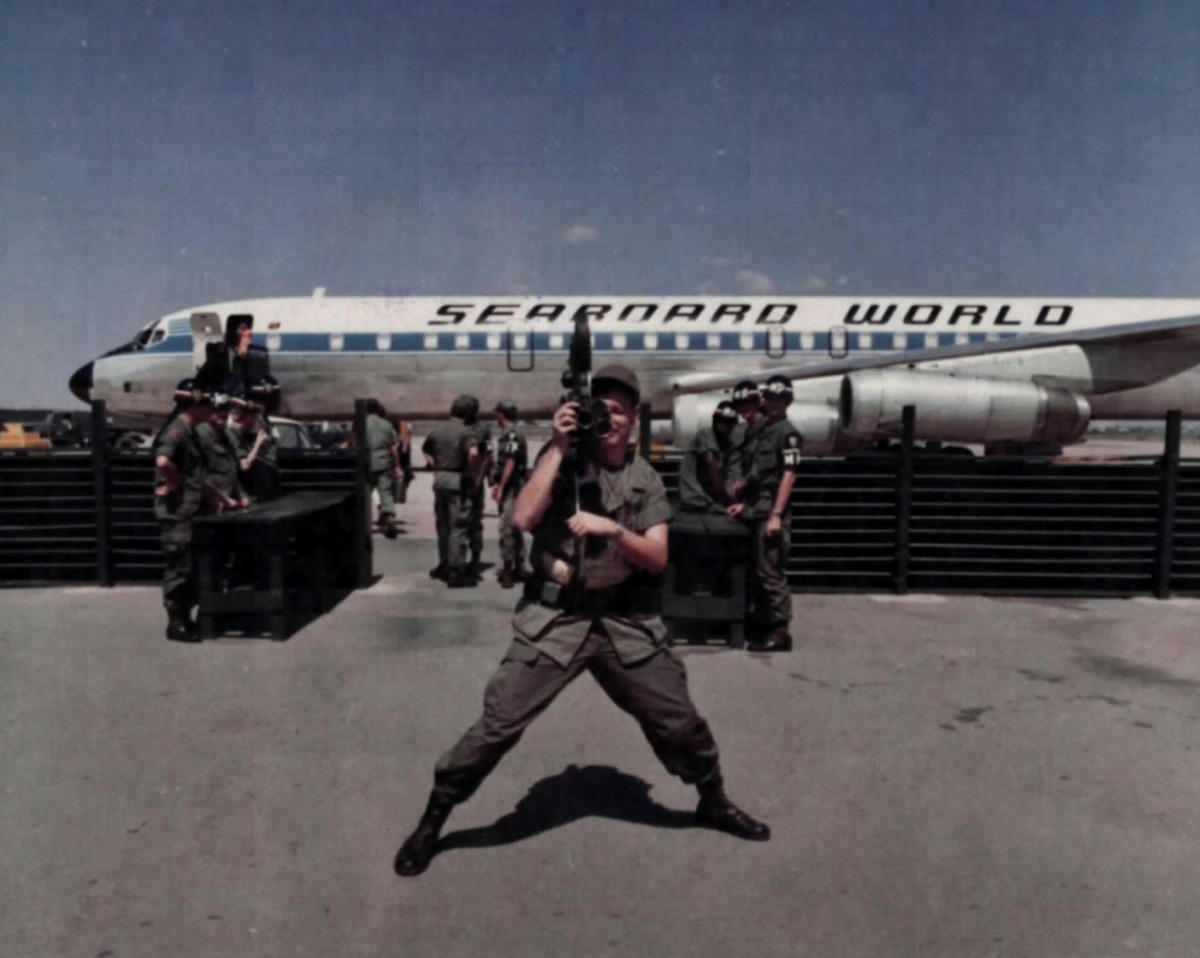 Bien Hoa, Vietnam · 1972
The review's authors list what drove it: price, availability, social norms, life circumstances. In Vietnam heroin was cheap and everywhere; at home it was expensive, illegal, and surrounded by different people. Most quit without any rehab, because the triggers disappeared along with the setting. The same authors warn that this work is often retold selectively, and environment doesn't explain everything. Still, for your patterns the takeaway holds: if you keep the bottle on the shelf, the bar on your way home, and the old chat where you can "just ask," you're putting willpower up against autopilot.
That's why people who've let things go far enough need real distance. You do have to decide "I'm not drinking," but you also have to avoid the places where the risk of slipping is high. Alcoholics are told to stay out of bars, some check into rehab because they can no longer manage alone, and admitting that is a sober self-assessment.
My own pattern: the rescuer program
In 2023 I wrote on my channel that the "hero" and "rescuer" programs in me were still not a hundred percent gone and that turning clients down was really hard for me. First I spent a long time learning to say no despite the money: when there's no money, you badly want to close your eyes to something and agree, because the family has to eat. Then I learned to say no to a**holes, which turned out to be hard too. Then to people I'd struggle to get results for, because I could tell in advance they'd be a problem client.
Then came the hardest level for me: saying no to cowards. The rescuer inside whispers that you can be patient, the person will grow, you just need to push a little more. I had already decided to turn down one client, and my hand still wouldn't hit "send." My head kept spinning: "Maybe he'll grow up?" "Maybe he'll finally start listening?" "Maybe he'll stop replaying the same script?" The week before, I had forced myself to "fire" three people, and with one of them it worked the way it should: he grew up instantly. I ended that post with: "Today I'll fire one more. I won't take him on."
Look at the last question on that list. The man asking whether a client would stop replaying the same script was replaying his own at that very minute. A pattern doesn't disappear, it moves up a level: from "I can't say no because there's no money" to "I can't say no because I feel sorry for him." You recognize it by the same permission phrase. Mine was "maybe he'll grow up."
Is repeating patterns a trauma response? Can you break it for good?
First, a boundary. If we're talking about chemical addiction, alcohol or drugs, a doctor answers this question, and there's one rule: full sobriety, no "just a little." Everything below is about beliefs and emotional habits.
The classic view of addiction says it's for life: slip five years later and you're right back at full speed. I'm not a big believer in that idea when it comes to beliefs, because I've spent my whole life working with people differently and I see different reactions. If you work a belief through to the end, the ban eventually stops being necessary. I do a lot of work on myself, and I see no relapses.
But without professional help there will most likely be side effects: a reason to get back in touch will turn up, and you'll slip. Distance buys you time, and what removes the cause is working on the belief itself: where it came from, how it served you, what happens if you replace it.
Freud described repetition compulsion, the unconscious urge to recreate a traumatic situation again and again, and many articles on this topic explain every repeated pattern as childhood trauma. Sometimes that's true, and the woman above is an example. But bullsh*t beliefs come from four sources: the society you grew up in, your family, your personal experience, and authorities whose words you took in without a filter. A lot of patterns are just copied scripts. In the story about the roast turkey that I unpacked in the article on money only coming through suffering, three generations of women cut the tip off the bird before roasting it, and the reason was a great-grandmother's small oven that was long gone.
Why the same pattern shows up at work and at home
In the PERL system I develop each area of life separately, but some things run like a thread through all of them, and boundaries are one of them. Whatever you let your employees do to you, you let your mom, your brother, and your partner do too. If people can step over your boundaries, they'll do it everywhere; at work it costs you money, at home it costs you your nerves. That's why a founder's complaint that "I keep getting the same kind of employees" often isn't about hiring at all, and it gets fixed in the same place as the patterns in your personal life.
What a person looks for in a partner and in a business shows where they are on the pyramid of development right now. In relationships some people need safety, others need care. In business some come to make money, then to prove something to relatives and old classmates, then to change the world. There are no bad needs here, they're just different at different stages, and patterns appear where you try to meet a need from one level with a method from another.
How to break a pattern you keep repeating: 7 steps
- Name the pattern in one sentence and count the loops. Instead of "I'm unlucky with people," write "the third business partner in a row has left with my client list." Count how many times it's happened and what each loop cost you: money, years, health.
- Find your "one glass." Write down the phrase you use to give yourself permission to start again: "I'll just ask how they're doing," "he's changed," "once won't hurt." That phrase is your trigger.
- Make a written decision in the form of a rule you can check. For example: "I don't take on a partner who isn't putting in his own money." A vague "I won't do that again" lasts until the first bad day.
- Cut off the specific trigger while you go through withdrawal. Block, leave the shared chats, stay out of the "bars" of your particular pattern, and in extreme cases move. Lean on people outside this script; I covered how to do that without burning bridges in the article on how to change your social circle. A sign the withdrawal is passing: thinking about the old loop bores you, and the pull gets weaker.
- Don't switch from vodka to tequila. Don't jump straight into a new relationship, project, or partnership built on the same template. Ride out the withdrawal; it ends.
- Replace the belief once you're out of the trigger zone. Doubt it, find evidence that the opposite is safe and pays off, and only then act differently, ideally with someone who can see you from the outside. Every evening ask yourself: "What did I do today that I've never done before?" Answer it 30 days in a row and you can smash any damn hamster wheel to pieces.
- If you keep sliding back, see a professional. Your own script is easier to see from the outside than from within.
The alcoholic who says "that's it, I'm done" in the morning is sincere. His decision is real; he loses in the evening, wherever the bottle happens to be. Patterns work the same way. You don't need to double-check your decision. Check something else: where you'll be tonight, who with, and what phrase you'll say to yourself first.
Frequently asked questions
Why do I keep repeating the same mistakes?
Because beliefs and emotional habits work like an addiction: a familiar setting and familiar people switch them on, and insight arrives too late. Your decision to change can be sincere, but while the environment stays the same, autopilot beats willpower. What breaks the loop is a decision, distance from the specific trigger for a while, and replacing the belief that fed the habit.
How do you break a repetitive pattern?
Name the pattern in one sentence, find the permission phrase that restarts it, turn your decision into a rule you can check, and cut off the specific trigger while the pull fades. Then replace the underlying belief, ideally with someone who sees you from the outside. If you keep sliding back, work with a professional.
Is repeating patterns a trauma response?
Not always. Beliefs come from four sources: society, family, personal experience, and authorities you trusted. Some patterns are tied to trauma, which Freud called repetition compulsion, but many are simply copied from parents or your environment, with no drama behind them at all.
Why do I keep dating the same type of person?
Because you're choosing by the same template, and your brain is chasing a familiar high. A new partner with the same script is vodka swapped for tequila: lower proof, same result. Cut contact where it pulls you in, lean on people outside the script, ride out the withdrawal, and work on the belief behind the choice. If there's abuse, plan leaving with crisis professionals.

Next step — pick a format
A 5-day game for experts — from zero to your first $1,500
Start free →5 days — how a practitioner and entrepreneur puts AI to work
Learn more →Build a producer team around an expert in 30 days
Learn more →A private community of entrepreneurs — growth without the operational grind
Learn more →It's Easier to Break the Loop Among People Who Already Have
Come to a session: we'll find your pattern, its permission phrase, and the setting that keeps feeding it.
Apply