How to change your social circle, and what a stronger room actually changes
In July 2015 I was on a train home from Kyiv, typing a note into my phone about feeling stupid for the first time in years. I had just spent a few days around people who understood my terms, argued with me on the merits, and handed me feedback that stung. What I wrote was this: I'd pay good money to feel like the dumbest guy in the room more often.
You can change your social circle in five steps. First, count how your 168 hours a week are actually spent, because a peer group is measured in hours, not in contacts on your phone. Second, find one room where you're the weakest person there, and get into it in person. Third, show up with something to give, because the first question strong people ask a newcomer is what you're doing here. Fourth, drop the performance, because people attach themselves to the version of you that you play. Fifth, keep showing up for at least six months, because environments work through repetition. You don't have to cut off your old friends. You just stop appointing them as advisors on questions they've never faced.
Here's the uncomfortable part. A stronger room won't launch you into orbit the way the motivational posts promise. It does two things you can actually see in the data: it resets what you consider normal, and it removes some of the failures waiting in your future. I write this after thirteen years of teaching, two thousand one-on-one interviews, and three bankruptcies of my own. When people ask me for the three things that matter most at the start, I've been opening with the same one for years: almost everyone will talk you out of it, and almost none of them will ever come back and say they were wrong.
How to change your social circle: the five-step method
- Audit your 168 hours. Write down honestly how many hours a week you spend with people who have already done the thing you're trying to do. For most people the answer is zero, and I mean zero, not ninety minutes. Then write down what fills the rest: who talks into your ears, whose videos you watch before bed, whose conversations you absorb at lunch and in the work chat. That's your real peer group. The contact list on your phone has nothing to do with it.
- Find one room where you're the weakest. One, not ten. A conference, an industry club, a mastermind, a sports team, anywhere your current result sits at the middle of the pack or below. The test is simple: if you're comfortable there and everyone admires you, you walked into the wrong room.
This advice has a price nobody mentions, and it even has a name: the big-fish-little-pond effect. Drop someone into a group that's clearly above them, and they rate their own ability lower, get more anxious, and quit sooner. It has been confirmed across twenty-six countries. Being the weakest works under three conditions: you get concrete feedback on your work, you have a role in the room, and you're committing to at least six months. Without those, the room will simply lower your opinion of yourself. - Show up with something to give. People have asked me for years: Igor, how do I get into a great network? The honest answer sounds rude. Why would they want you? Strong people treat their circle as a resource, something they need in order to grow, and asking for advice is taking that resource. You have no idea how many times a day I get a message that says "can you help." Any community you enter as a consumer will keep you outside. Walk in asking what you can bring, and people start talking to you. On that trip to Kyiv I was giving Masha Solodar feedback on her company while she went through my landing pages, over a glass of fresh juice, a trade for a trade.
- Drop the performance. As long as you're playing a version of yourself, you gather people who like the version. Say plainly what you do, what you earn today, and where you're headed. Half of the wrong people will walk away on their own, which is the best thing that can happen to you. While you're at it, practice a thirty-second introduction: name and field, the thing you're best at delivered through one case with a number in it, what you can help with right now, what you're looking for. Without it you'll be remembered as the guy who talked about something.
- Keep it up for six months. Environments work through repetition, and one big evening doesn't cut it. When I started out, I delivered newspapers on a skateboard and put every dollar I earned into learning: I bought CDs, ran audiobooks through my headphones, read Rich Dad Poor Dad before breakfast and Napoleon Hill off my phone on the tram to university. What actually moved the needle were the live trainings I attended every two months, because those had people in them. Eighteen months of that, and I went from courier to branch director. The books gave me the vocabulary. The rooms set the bar.
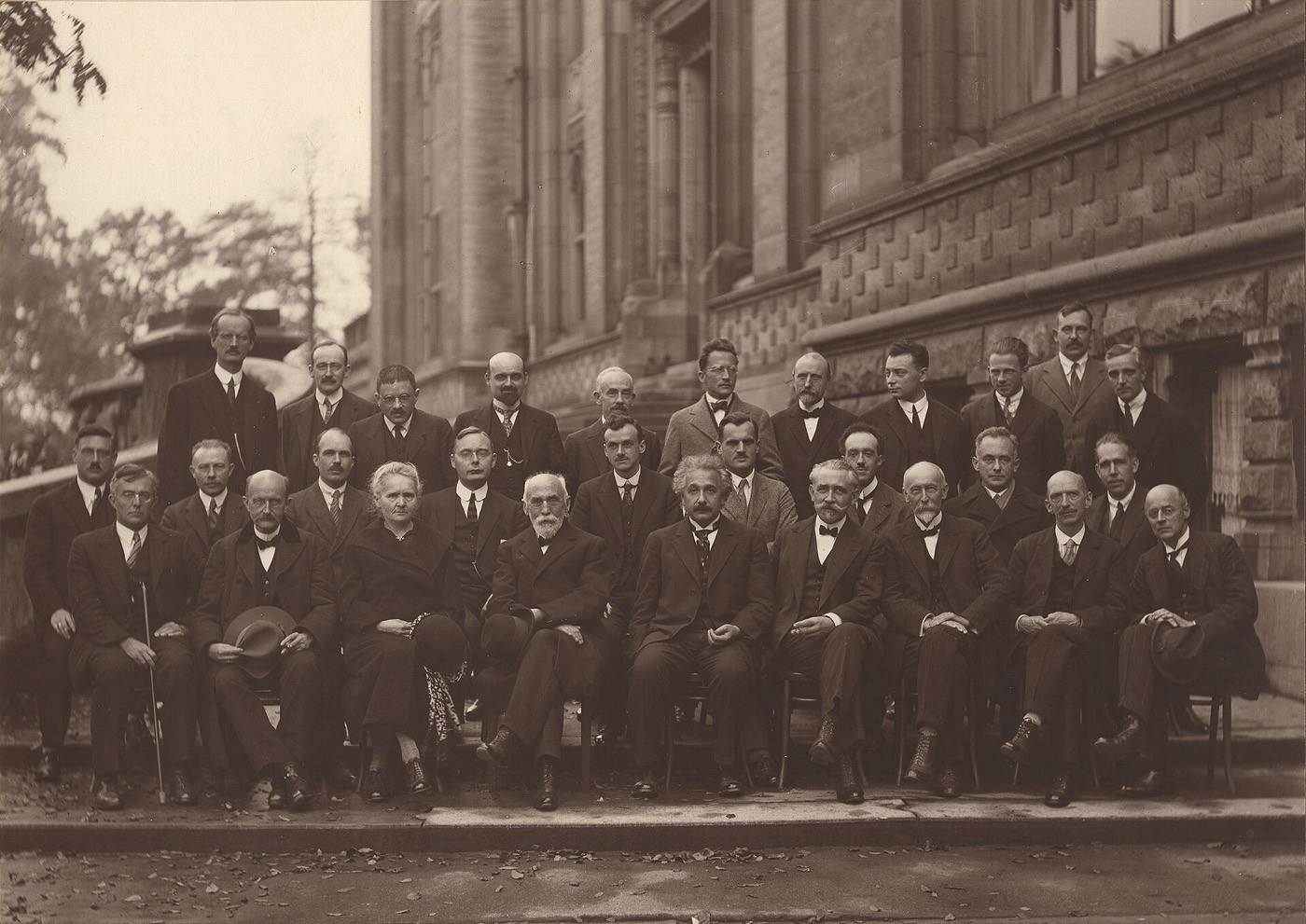 BRUSSELS · 1927
Why your peer group beats willpower: the 167-hour rule
Imagine a dollar millionaire agrees to mentor you. You meet once a week for an hour, you drink coffee, he walks you through how he thinks and the scale he operates at. Great story.
Now ask what happens during the other 167 hours of the week.
The people around you don't believe in this. Your parents think you're wasting your life. In the evening there's a show, then the feed, then videos until two in the morning.
Your environment is your context: the set of people, conversations and images your brain uses to decide what counts as normal. The word "networking" misses it entirely. This is about normal: how much money is normal to earn, what time is normal to get up, whether it's normal to start over at thirty-five, whether it's normal to ask for help, whether it's normal to want more.
That's where the whole effect comes from. Success is built out of micro-decisions, thousands a day, and almost all of them run on autopilot off your idea of normal. Losing weight is much harder when everyone at the table says it's your mother-in-law's birthday, have the cake. Starting a business is much harder when the standing topic in your group is who got screwed over this week. I wrote about the same mechanism in the piece on why laziness doesn't exist.
One caveat: those 167 hours aren't uniform. About fifty of them you're asleep, another forty you're at a job where you never picked your colleagues. But the remainder is where your micro-decisions live, and the remainder is the part you can rearrange.
"You are the average of the five people you spend time with": is it true?
The line is attributed to Jim Rohn, and there isn't a single study behind it. No sample, no method, no explanation of where the number five came from. It's a good phrase from a motivational speaker that has been repeated for thirty years as if it were a law of physics, and in most articles about peer groups that quote is where the thinking stops. The real data is more interesting and much messier.
Nicholas Christakis and James Fowler went through the Framingham Heart Study, thirty-two years of observation of a large social network. Here's what came out: if your friend gained weight, your own chances of becoming obese rose by 57%, siblings came in at 40%, spouses at 37%. Neighbors on the same street showed no effect at all. Distance decided nothing, the tie decided everything.
That paper took heavy fire. Russell Lyons went through the statistics in 2011 and argued the conclusions simply don't follow. Ethan Cohen-Cole and Jason Fletcher used the same method to "discover" that acne, headaches and height are contagious. So the question of how much behavior travels through a social network is still open, and anyone telling you science has proven your circle determines everything hasn't read the second half of the argument.
Alex Mas and Enrico Moretti studied supermarket cashiers (Peers at Work): put a strong worker next to the others, and the others speed up. The gain is modest, a 10% increase in the average productivity of coworkers raised a worker's effort by 1.7%. The detail that matters more is this: the effect only came from coworkers the person could actually see. Anyone working behind their back was ignored by the body entirely.
Remember that the next time you plan to upgrade your peer group by following someone smart online.
One point seven percent is a small number, and I won't pretend otherwise. It's large in a different sense: it's a gain out of thin air, with no training and no motivation, purely from who is standing next to you at the register. And it measures speed on an assembly line. Decisions work differently.
Josh Lerner and Ulrike Malmendier studied Harvard Business School graduates. Here's the methodological detail I dragged this paper in for: students are assigned to sections by lottery. So the "strong people simply cluster together" explanation can be set aside, and you're looking at the effect of the environment itself. It turned out that the more classmates with entrepreneurial experience a section had, the fewer businesses its graduates went on to start. And the entire drop came from the ventures that would have failed. The number of successful ones didn't move.
In practice that means this: someone who has spent time around people who already got burned doesn't walk into two of the five obvious holes. A strong environment subtracts part of your future failures, and that's the honest trade: in a strong room you get carried away less often.
| What the famous quote says | What the data shows |
|---|---|
| You're the arithmetic average of five friends | The number five appears nowhere; the effect depends on who you see and how often |
| Behavior spreads through your circle directly | Contagion was shown, then seriously contested by statisticians |
| Strong people will accelerate you | Strong people mostly reduce the number of your failures |
| Following smart people online is enough | The effect appeared only for coworkers within the line of sight |
No illusions, though: none of these studies proves that changing your circle will make you rich. Causality is firmly established only in the Harvard case with the lottery. Everything else is observational, where strong people may well have ended up in one room simply because they're strong. My claim is more modest, and you can test it on yourself: your environment sets what you consider normal, and normal drives your decisions.
How to tell your peer group is holding you back
The "toxic people" label gets in the way here. It describes how you're treated, and what we care about is the bar the group treats as normal. Someone can be warm, loyal, and still broadcast the ceiling they live under every single day. Watch three things.
One: you're uncomfortable talking about your plans. Nobody would laugh, but you'd have to justify yourself and explain why you even want this, and you'd rather not.
Two: your biggest result of the year counts as a curiosity in this group. Not something to ask about. Something to joke about.
Three, the ugly one: you've started lying. You round your income down so you don't stand out. You say it's nothing special when it's something special. You put the book back in your bag.
The last one matters most, because it's about you. We end up surrounded by the wrong people largely because we lie: we play a role, we show a version, and we attract people who bought the version. I don't smoke and I say so openly, and there are almost no smokers around me, it works at that everyday level. As long as you're performing, you're the one picking the wrong room, and no change of scenery will fix that.
In 2015, the year that turned out to be a turning point for me, I wrote down that I had grown fast for years and my friends couldn't keep the pace. They phrased it different ways, but it came to one thing: being around me was uncomfortable, and "Igor, you've gotten full of yourself" was the easier sentence. I took offense at the time. Now I think half of it was on me, because I stopped being real with them before they stopped understanding me.
What to do when friends don't support your ambitions
Don't cut them off. That has to be said first, because the internet advises the exact opposite, and it sounds great right up until you're alone.
Fear of losing friends stops people harder than fear of failure. I see it in my programs constantly: a person understands that if he goes where he's headed, his circle will change and some people will fall away, including people he loves. So he doesn't go. And that's the life.
Brace for this too. Almost everyone will talk you out of it, and they'll do it out of their own fears, with no malice involved. They'll say you're headed the wrong way, that you've joined a cult, that they've "lost you." And when it works out, none of them will come back and say they were wrong. The best you'll get is "I always knew you'd make it." That stings, and it's part of the game.
Here's how you do it. You stop appointing friends as advisors on questions they've never faced. The friend who has spent twenty years on a payroll loves you, but he isn't obliged to understand your problem, so asking him whether to double your prices is pointless, and getting angry at his answer is equally pointless: he told you honestly how the world looks from where he stands. You stop reporting in. Plans go to people who have done this before, and friends get football, kids, and life.
And keep this in mind. The stretch after you've left the old group but haven't reached the new one will be the loneliest part of the road. No new friends yet, no results yet, and the old thing already burned, so you're living on hope alone. That's a normal part of the route. Everyone I've watched go through this went through that part.
How to meet more ambitious people when you have nothing to offer yet
In the late 2000s somebody brought me to my first Amway seminar. I barely understood where I was, and network marketing never became my life, but I took one thing out of that room. Two thousand people in the hall, company leaders telling their stories from the stage, other leaders sitting at white tables right up front. To the hall they were close to gods. I was watching something else: among themselves they talked like equals. They had their own circle. Which meant you could get into it.
The second time I felt it was in 2012, at an industry conference where all the big players showed up. I had run exactly two webinars in my life at that point and understood nothing. I sat in the audience wanting one thing: to come back a year later and be recognized. To drink tea at that table. Today I drink tea with the people I was looking up at. It took a few years, and the whole time I did two boring things: I kept doing my work, and I kept showing up. Showing up turned out to matter as much as the work.
So if you have nothing to offer right now, you own two assets those people don't have: time, and no crown to protect. Take apart someone's product and send them the analysis with no meeting request attached. Do a piece of work for free that you find interesting anyway. Bring someone a client. Organize a meetup in your own city and invite the person you want to reach, because the organizer ends up at the center of the network by default. That's how almost everyone I've seen got in: useful first, familiar second, one of them third.
Do paid masterminds and clubs actually work?
They do, and from here on I'm speaking as an interested party, because I run one. So I'll cover both what you're paying for and what you're risking.
The format isn't new. In 1727 Benjamin Franklin put together a club for mutual improvement in Philadelphia, twelve tradesmen and shopkeepers meeting on Friday nights. Out of that club came the city's first public library, its fire company, and its hospital. Three centuries ago people were paying with time and obligations for a seat in a room with people who pull. The word "mastermind" didn't exist yet.
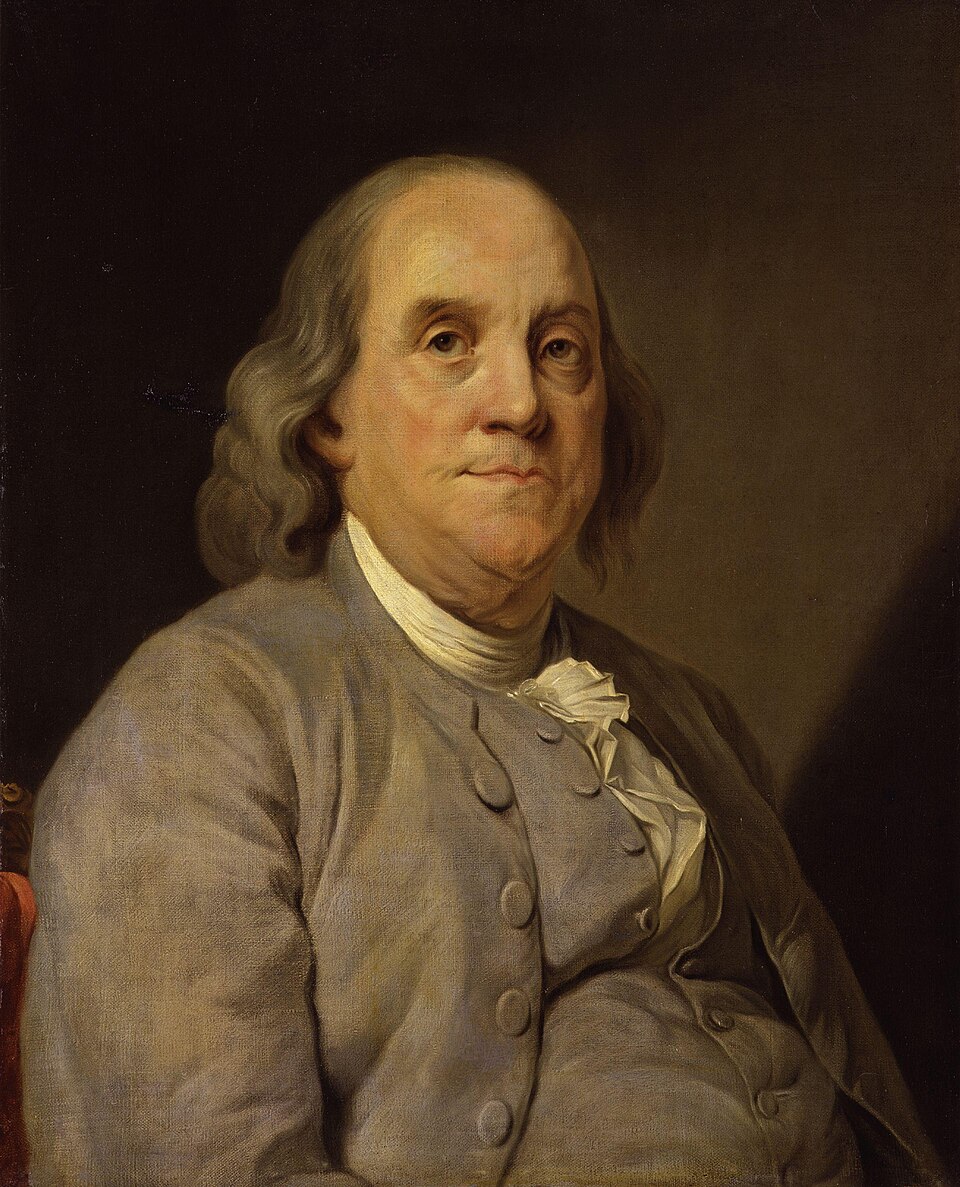 PHILADELPHIA · 1727
Years ago a woman in my coaching program said something I've never forgotten: it turns out you can buy friends, you just buy coaching. It sounds cynical, and it's an honest description of the mechanics. What you're paying for is a filter and speed: somebody assembled a room of people with a similar level of ambition and screened out the rest.
Now the risks, and I've seen them up close. In that same year, 2015, I went deep into the online-course industry and was appalled at how much dirt was in it. People sat in each other's coaching programs to steal tactics. They stiffed each other on money. For some of them the life goal was pushing a competitor out of the market. Very few were thinking about their clients' results. Personally, you're risking three things: taking on goals that aren't yours because the room wants them; scaling and borrowing too early because it's embarrassing to lag behind the guy across the table; and turning membership into club tourism, where you attend meetings instead of working.
So look at the values of the members, and don't look at status: status is what fools people most often. You can check it like this:
- what they talk about when nobody is selling from the stage;
- whether members talk about their failures, or everyone is permanently "crushing it";
- what happens to someone who has a bad month, whether he gets picked up or quietly sidelined;
- whether you can stop pretending in there.
The last point matters most. A strong environment is one where there are people you can be plain with, without trying to look good. If you're looking for that kind of room, mine is called Freeman Alliance, and this is exactly the interested-party disclosure I flagged above.
I've written about why the room matters more than another push in two other pieces: the millionaire mindset, on the normal a person makes decisions from, and what to do after a business failure, on how people climb out of holes with help.
Your environment doesn't pull you up on its own. It sets the standard for normal, and after a while you stop noticing that you live by that standard, and you explain your results with laziness or personality instead.
So start with the cheapest possible move. Open last week's calendar and count the hours you spent with people who have already done what you're trying to do. Then pick one room for the next six months and walk in with something to give. The 1.7% the economists found among cashiers accumulates exactly like that, with no heroic push, from whoever happens to be standing next to you on an ordinary Tuesday.
Frequently asked questions
Is “you are the average of the five people you spend time with” actually true?
As a metaphor, yes. As a fact, no. The line comes from motivational speaker Jim Rohn, there is no study behind it, and the number five was invented. The data points elsewhere: what matters is contact frequency and whether those people are regularly in your line of sight. Five friends you see once a year affect you less than the colleague at the next desk.
Should I cut off friends who hold me back?
No. It is enough to stop asking them for advice on questions they have never faced, and to stop reporting your plans to them. A friend loves you; he is not obliged to understand your problem. Cutting someone off is warranted in one case: when a person systematically belittles you and you feel worse after every conversation.
How do I meet more ambitious people if I live in a small town or can’t afford a club?
Density changes, the principle does not. Free moves work slower but they work: two or three industry events a year that are worth the trip; professional chats where you answer other people’s questions; your own recurring meetup in your town, because the organizer ends up at the center of the network. I started in a small town where we did everything by guesswork, and my first strong connections came from travel.
Does an online peer group work as well as an in-person one?
The honest answer is that nobody knows. The cashier study measured coworkers in direct line of sight, and stretching that to Zoom tiles would be dishonest. In my practice online works under two conditions: cameras on, and real obligations to each other, where members know your numbers and will ask about them next time. Feeds and follows do nothing, because nobody there notices your absence.
How long does a new environment take to change results?
Count in months. The first shifts in your head show up after six to eight weeks of regular presence, changed decisions after half a year, money later, because there is always a lag between a decision and a payment: you make it, you sell it, they pay. Plan a horizon of a year and don’t quit in month three when nothing is visible yet.

Freedom starts exactly where you're afraid of it
Freeman's Alliance is a community where owners work through their personal syndromes and build systems that run without them.
Learn more