Why AI Implementation Fails in Small Business: You Hand It the Wrong Job
The worst thing about AI is the bloggers who talk about AI. They teach people to type prompts like "imagine you're the best marketer in the world, build me an awesome funnel" or "you're the best web designer of 2026, analyze my competitors, make it look like Apple, go, create." F*ck, that's not how it works. And people do exactly that, get polished nonsense back, and decide AI just doesn't work for their business. Meanwhile, when I show my partners how an AI model built the first screen of our website in fifteen minutes, a screen a designer charges $60 to $120 for, they can't believe it's even possible.
AI implementation fails in small business because owners hand AI the wrong part of the job. Every business task runs on the same three-step loop: define the problem, do the work, check what came out. Then the loop closes and you define the next problem. You can delegate only step two, the doing, to AI, just like you would to an employee. Steps one and three are the CEO's job, they stay yours for good, and most business owners try to hand exactly those two to AI.
This isn't just a small-business problem. In a 2024 RAND study, 65 experienced data scientists and engineers named the number one reason AI projects fail: the people commissioning them misunderstand or miscommunicate what problem actually needs solving. By RAND's estimate, more than 80% of AI projects fail, twice the rate of ordinary IT projects.
In the summer of 2025, MIT's NANDA initiative found that 95% of companies had gotten zero measurable return from generative AI, even though US businesses had put $35 to $40 billion into it (coverage of the report). The authors blame AI systems that don't retain a company's context and don't learn from it: a chatbot is easy to try, but without memory and customization it falls apart inside real workflows. I read that as the same problem from the other side. Nobody handed the machine the knowledge of the business. I've been in business for twenty years, I've been building websites since I was eighteen, and I've tested everything below on my own projects.
Why does AI give generic answers, even when you pay for the best model
A model rarely stops you to say "this task is unclear." Give it a vague request and it hands back smooth text that is the statistical average of everything it has ever seen about funnels, websites, and marketing, because it has nothing else to lean on. When you write "figure out what I need," you're handing it step one, defining the problem. When you write "analyze the mistakes and see what's wrong," you're handing it step three, judging the result. And then you're surprised it generates garbage.
I call Claude a straight-A intern on their first day at work. Smart and fast, but it doesn't know your customer, your message, or what's okay and not okay in your company. You'd never tell a real intern on day one "you're the best marketing director alive, go make us sales." You'd explain the task, show an example, and check the work. It's the same with AI. The intern just answers in seconds, so it feels like you can skip the explaining.
What tasks can you delegate to AI, and what can't you
I didn't invent the three-step loop. Back in the 1920s, physicist Walter Shewhart at Bell Labs described controlled production as three steps: specification, production, inspection. W. Edwards Deming later developed the idea into the famous PDCA cycle, plan, do, check, act, and took it to Japanese managers in the 1950s. My takeaway from that history is simple: the loop only turns when the first and last steps are held by whoever owns the result.
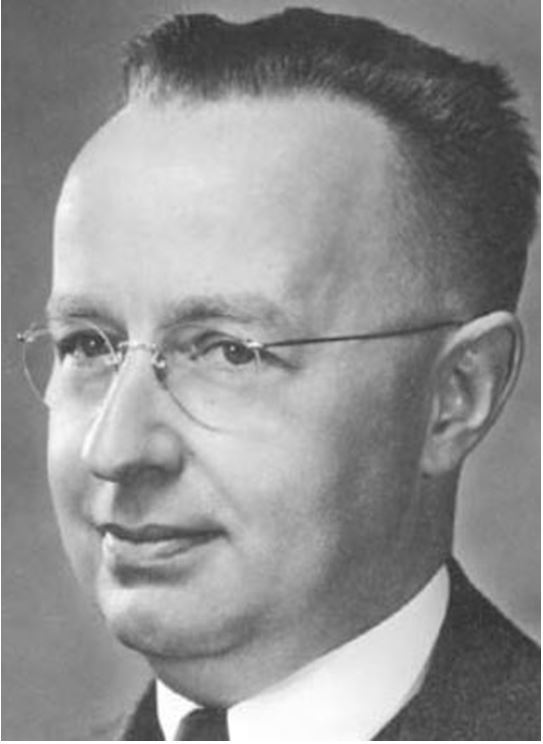 USA · 1920
With AI, every one of us now gets the chance to be a CEO. And the CEO's job is exactly this: define the problem, delegate the task, look at what got done, and then lock back onto the question of what comes next. If you have a team, a senior manager can own steps one and three for their area, but then they are the CEO of that area, and AI still only gets step two. You might have two employees (or none, if hiring scares you) and twenty AI workers. The loop stays the same.
| Hand to AI (step 2, the doing) | Keep for yourself (steps 1 and 3) |
|---|---|
| Build a landing page from your structure | Decide what the site should sell, and to whom |
| Rewrite copy in your voice from your source material | Messaging, offer, sales script |
| Lay out, visualize, design slides | The standard of “good” you'll accept the work by |
| Click through forms, calculate, pull data together | Judge whether it sells, and set the next task |
This is where a distinction I've been explaining about teams for years comes in: delegating versus assigning. Delegating is handing off something you used to do yourself, so you know what good looks like. Assigning is handing off a task nobody in the company has ever done and hoping the other person figures it out (I break this down in my article on delegation). You hire a reels expert, pay about $3,500, and a month later nothing works. AI is the same story, just faster and cheaper. If you don't understand how a good funnel works, you're not delegating it to AI, you're assigning it, and assigning without control ends the same way for people and machines.
Can AI replace a marketer
It can replace a marketer's hands, as long as you bring the marketer's head. A lot of business owners today are looking to be rescued. First they looked for rescue in marketers: a great marketer will join the team and set everything up, because I don't want to deal with it. Others looked for rescue in salespeople: a great closer will show up and sales will start rolling in. They won't. That's not how business works, and now the same hope has simply moved over to AI.
About ten years ago I was already saying that the problem with entrepreneurs is that they never learn management. They learned to make their product, but not how to delegate it, automate processes, and actually run things. Baking pies and teaching an employee to bake the same pies is one thing. Hiring people to manage the people who bake is a completely different skill. AI is the same. You need to know what website you need and how it's structured to sell. You need to understand funnels, messaging, and how sales copy gets written, and then AI just assembles it. We're saving on labor hours, not on knowledge and competence.
We used to hire an SMM manager, a reels editor, a copywriter, a designer, and an assistant, $350 to $600 a month each, to dig for messaging and design slides by hand. Today AI workers do that job for the price of a Claude subscription. But first we trained them. We explained what's okay and what isn't, gave them our banned phrases, our speaking style, and our design. That's exactly what we teach in AI Tools (IInstrumenty), the course Sasha Turubarov and I run together on my platform (in Russian). AI replaced the marketer's hands. The head stayed ours.
What it looks like for me: a landing page first screen in fifteen minutes
In April we were moving the site for our free game Tochka Sborki ("Assembly Point") off a website builder onto our own platform, and I decided to refresh the first screen while we were at it. An AI model put together all the copy and images and adapted them to our brand style and to every screen size in fifteen minutes. A designer charges $60 to $120 for a screen like that.

Fifteen minutes went into the build, but something more important came before it. Before I asked AI to make the site, I fed it my own two-hour video where I teach students how to build a great landing page and lay it out around its core message. The AI assembled the screen on top of that message. Step one, what the page should say and why, was sitting in my video. AI only got the doing. That's why I wrote honestly on my channel at the time: don't fool yourself that absolutely anyone can do this just as fast and just as well. It's fast for the person who already knows what good looks like.
I rebuilt igorgraf.life, the site you're reading this on, from scratch in half a day in May, just by dictating. We were paying more than $5,000 a month for SaaS tools, so I rewrote the functionality of one of them, moved the team onto it, and cancelled the subscription. Later we used the same approach to take a whole chunk of work off our finance department. I even sent a bot to check whether the forms on the new site worked, and it walked through the pages clicking on its own. That's mechanical checking, and you can hand it to a machine too. But deciding what the site should sell, and whether it's selling, is the real step three, and no bot or model will do that for me.
How should a small business start using AI: the method
- Pick a real task, not a toy. Not a habit tracker to play with, but a line from your expenses: something you spend money or hours on every month.
- Do step one yourself. Describe the problem and what a good result looks like, clearly enough for a new hire to understand. If you can't describe it, you need to learn the subject, not hunt for a better prompt.
- Give AI your own source material. Your videos, scripts, best sales copy, examples of what you like. Like the landing page built from my two-hour video: the more of you it gets, the less internet average you get back.
- Delegate only the doing. Assemble, lay out, rewrite, visualize, calculate, click through.
- Do step three yourself too. Check the result against your criteria from step two and define the next problem. Not "analyze what's wrong," but "this part is off because a customer will read it this way, redo it."
- Track time like you would with an employee. If a task used to take you two hours a day, after delegating it takes thirty minutes to set up and check, and the ninety minutes you free up go to strategy.
- Roll it out, then hand support to the team. Building a tool today takes an evening. Getting someone other than you to actually use it is the real work. The moment the first "can you fix this button" requests show up, it's a job for the team.
Steps one and three are yours forever
Right now people are selling the idea that you can do nothing: buy an AI course, it will do everything for you, and you'll get rich. Reality is more modest. AI lets you skip handing your site to designers and developers, sort of, and even that is debatable because there can be mistakes, and it lets you test an idea very fast. But until you become a strong salesperson and write a good script yourself, the only thing you can hand AI is assembling it into a funnel. And until you design the structure of the ideal website, AI has nothing to build.
In that video I put it bluntly: as long as you try to delegate steps one and three, you'll make a terrible entrepreneur. It's about the role you've picked. You stay an intern managing an intern, and AI won't save you any more than the most expensive marketer would. Remember the prompt "imagine you're the best marketer in the world"? It's addressed to the wrong person. The best marketer in that chat has to be you.
Frequently Asked Questions
Why do most AI projects fail?
Most often because AI gets the wrong part of the job: people ask it to figure out what's needed and to judge what came out. AI is good at doing, but defining the problem and checking the result belong to whoever owns the business. RAND names a misunderstood problem as the number one reason AI projects fail.
Can AI replace a marketing person?
It can replace a marketer's hands, not their head. If you understand what funnel you need, what message and what copy sells, AI will assemble it in hours instead of weeks. If you don't, it will assemble the smooth internet average, and nothing will sell.
How should a small business start using AI?
With one real task from your expenses, not by picking a tool. First describe the problem and a good result yourself, give AI your own source material and examples, hand it only the execution, and keep the checking for yourself. You'll see results on a single task.
What tasks can you delegate to AI?
Anything that belongs to the doing step: building a site or landing page, layout, rewriting copy in your voice, visuals, calculations, clicking through forms. Defining the task and judging the result can't be delegated. That's the leader's job, even when the company has only one leader.

Next step — pick a format
A 5-day game for experts — from zero to your first $1,500
Start free →5 days — how a practitioner and entrepreneur puts AI to work
Learn more →Build a producer team around an expert in 30 days
Learn more →A private community of entrepreneurs — growth without the operational grind
Learn more →Own Steps One and Three Among People Who Already Do
Come to a session: we'll sort out which tasks in your business AI can take this week, and which stay yours.
Apply