Every entrepreneur has caught themselves thinking: if I could just 10x right now, everything would fall into place. The debts would clear, the pressure would lift, and I'd finally live the way I want. One big leap — 10x, 20x, 50x — and everything sorts itself out.
I've been through this myself, and I've watched it play out in hundreds of people over 18 years. Here's what I've learned: the problem isn't that you're not trying hard enough. The problem is that you're trying harder at the same thing. And 10x doesn't work that way. It's always a fundamentally different action — one you haven't taken before. Until you see that, your brain will sabotage you, and you'll call it burnout.
Why You Don't Want to Do What You Already Know
You know the feeling: you want it — the car, the house, the travel — but somehow the energy just isn't there. And it used to be there. Now you want it enough to feel bad about not moving, but not enough to actually do anything. You want it just enough to avoid doing it.
I call this the dog on a nail syndrome. There's an old joke: a woman is walking down the street and hears a dog whining. She asks the neighbor what's wrong. "He's sitting on a nail," the neighbor says. "Then why doesn't he get up?" "Because it doesn't hurt enough."
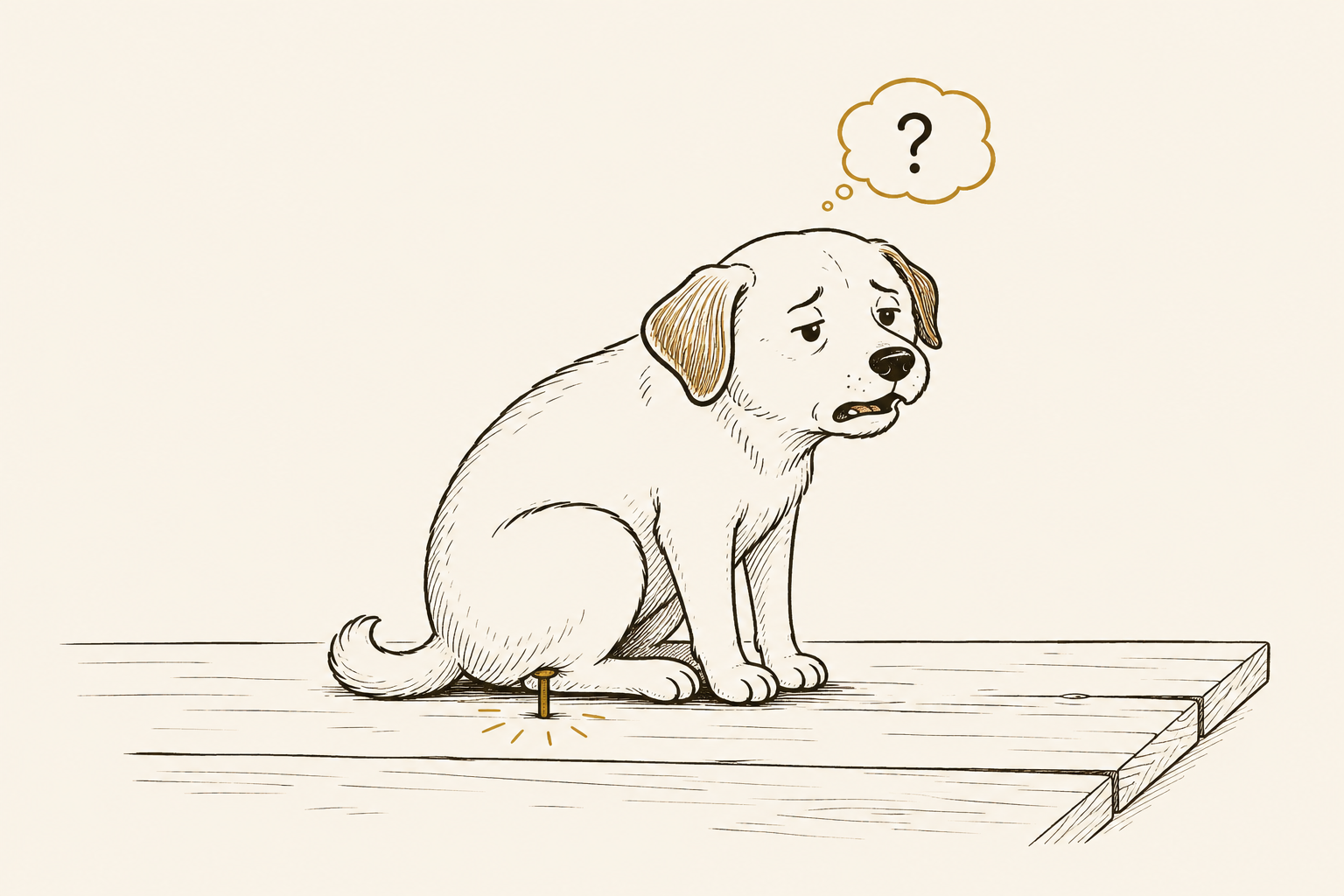
That's where most of us are. Uncomfortable enough to be unhappy, but not uncomfortable enough to change anything. And there's a specific mechanism behind it.
We grew up in a culture of obligation. From childhood, we were trained out of knowing what we actually want. We went to school not because we wanted to, but because that's what you do. We got good grades not out of love for learning, but because dad would lose it or because someone wired in a perfectionist complex. We went to university to avoid getting kicked out, to avoid disappointing our parents, to get the piece of paper. Desire was never part of the equation. And 99% of the people I've met started their business not out of desire — they started because they saw no future in employment, or didn't have enough money, or enough recognition, or some pain got big enough to push them.
That energy — the carrot behind you — can actually carry you for a while. When you're making $100–200 a month at a job, $2,000 looks incredible. But once you hit your first $2–3k a month — which is genuinely small money in business terms, but for most people from post-Soviet countries it's already more than anyone around them earns — you've technically covered your basic needs. You're not surviving anymore. You've got the beach, the sun, the restaurants. You can eat out every day when most people only do it on holidays. And the one motivator that was actually working — the carrot — runs out.
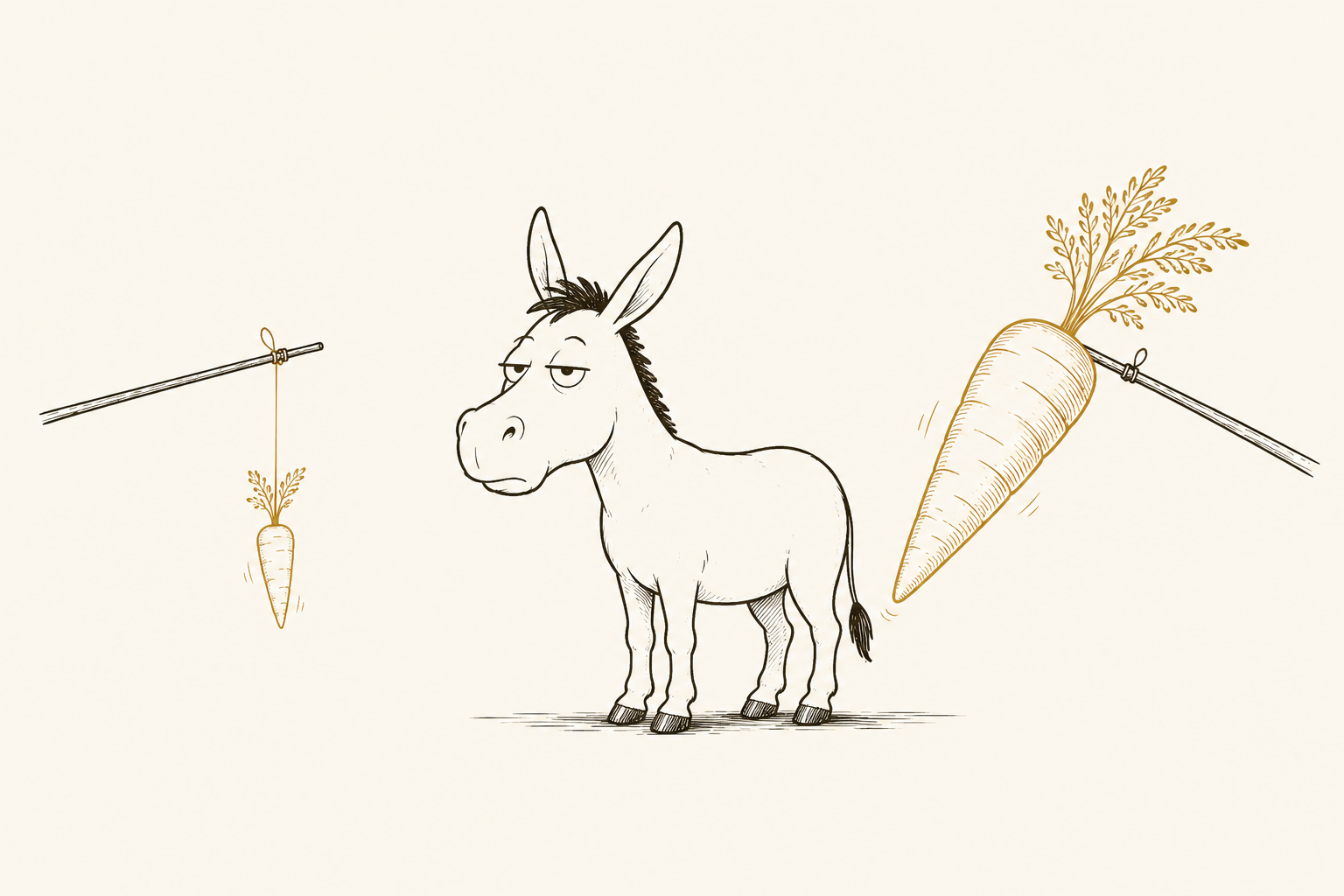
And there's another problem with the carrot: you get used to its size. Tomorrow, the same carrot does nothing. A $100 debt used to stress you out five years ago. Now it's a Tuesday. So you end up stuck in this cycle of waiting for things to get bad enough to act. The rent's due on the 25th, so you'll kick into gear on the 22nd, grind for three days, pull something together, pay the rent, and relax. Superhero mode — creating the crisis yourself so you can heroically escape it.
The Ceiling I Couldn't See
In 2011, I had a PlayStation gaming club. Revenue around $8,000 a month, net around $2,000. And there came a point where I'd come in, say hi to everyone, go to my little back office, open my laptop, scroll social media all day, and leave. Just rote tasks, no energy, no drive — existing inside a business that worked but didn't grow.
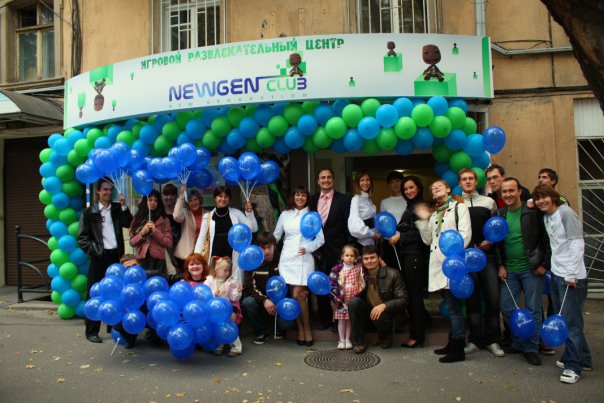
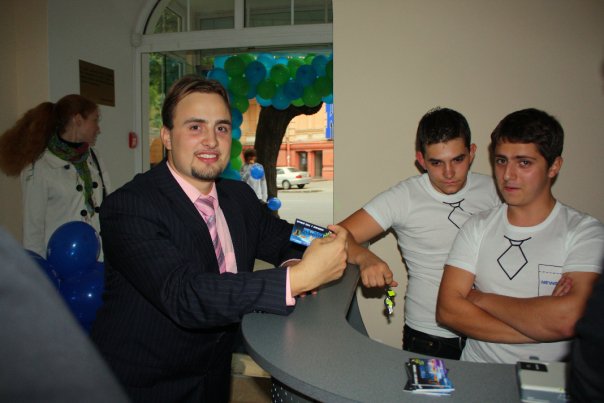
That's when I first thought: maybe Igor isn't an entrepreneur, a manager, a business operator. Maybe Igor is just a launcher. Great at starting things — I remember the energy, the excitement. But running it, scaling it, sitting in the routine? Not for me. So what did I do? I decided to launch a second business. That idea lit me up. I found investors, launched it, and within a month of launching I was bored again. So I thought: maybe I've just outgrown this niche. That became the main reason I sold the whole network. To move on.
Two years later, the property owner calls me. The people I sold to had quietly cleared out overnight and destroyed the place. They couldn't make it work. And he asked if I'd come back and restart it. I thought: why not?
When I came back, I grew it almost three times over. Opened three new locations. Two years earlier, that same business had a ceiling. But the ceiling wasn't in the business — it was in me, in my skills, in my competence. Over those two years I'd launched several more companies, managed different areas, become a business coach. My range had grown. For me, this was now a simple problem, not a hard one. Same business, same niche, same walls. But a different person inside. And three times the result.
You Can Dance All You Want
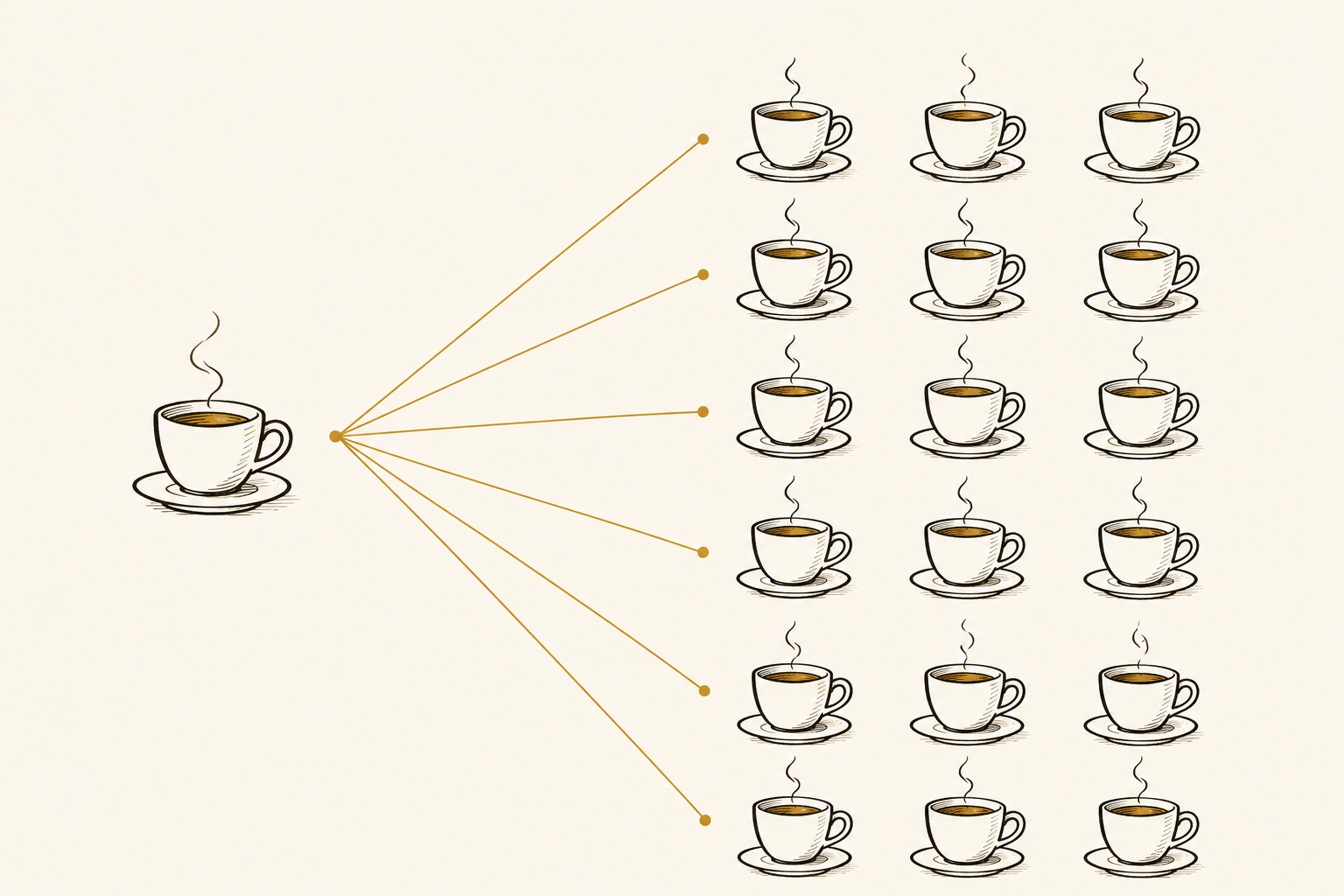
Here's how this plays out on a simple example. Say you open a coffee stand and work it yourself as barista. Capacity: 10 cups an hour, earning $1,000 a month. Want $1,200? Sell 12 cups. Makes sense. And that's where all the usual advice kicks in: delegate some tasks, get a second machine, put someone in a coffee-cup costume to wave people in, add croissants to raise the average ticket, three types of coffee, some kind of offer. You can tinker and find something.
But here's the question: can that one coffee stand ever make $15,000 a month? No. Not a chance. There's a hard ceiling on a single location. To get to $15,000 you need fifteen locations. A franchise. Scale. But that's a completely different activity. Right now you're getting better at making coffee and serving customers — opening locations or finding a franchise partner is a fundamentally different thing, something you've never done before.
You can't 10x with the same activity. That's a violation of the business model.
If you hired an employee — a sales manager or an accountant — and they came to you and said "Boss, how do I 10x my output?", you wouldn't say "just work harder." You'd give them different responsibilities, different tasks, a different scope. To do more, they have to start doing something different. The same thing applies to you. But for some reason, we tell ourselves: just try harder.
The Math Your Brain Runs Faster Than You Do
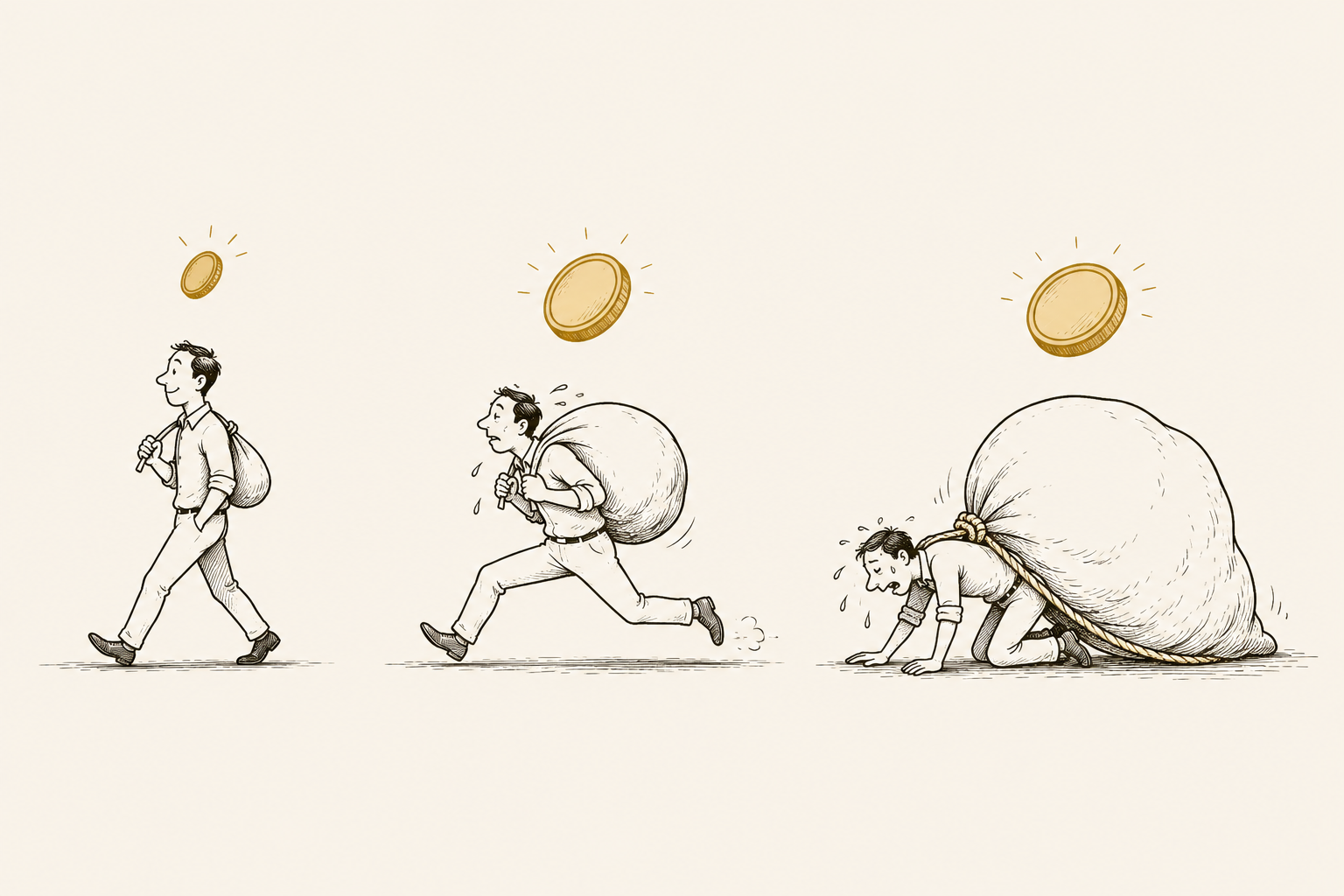
When you try to scale by doubling down on what you already do, you hit the diminishing returns curve. Right now you spend 10 units of energy and earn $1,000. Spend 20, you earn $1,200. Spend 50, you earn $1,400. And your brain says: I'm not losing sleep over an extra $200.
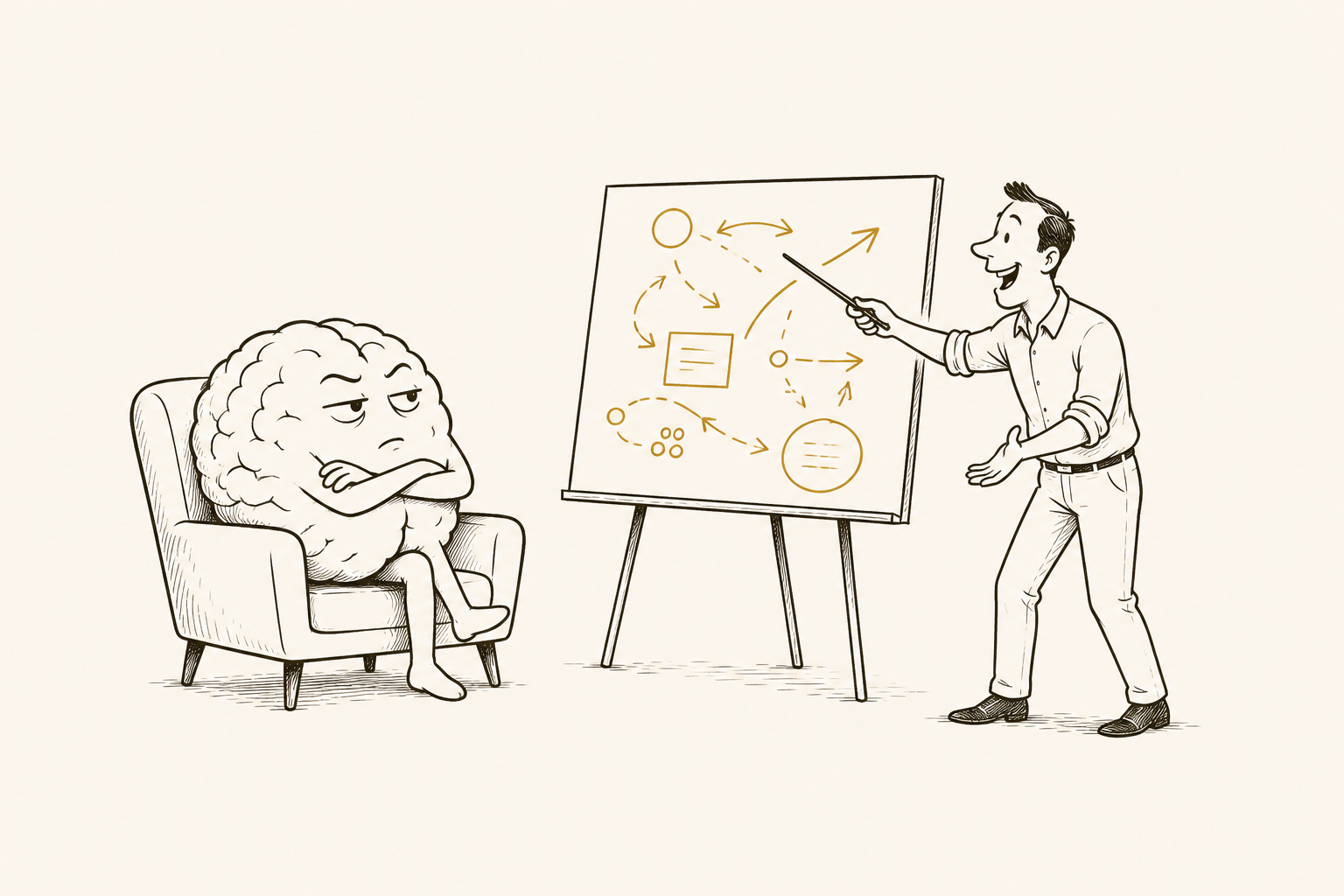
After you've made the third, fourth attempt to grow income the same way — close the debt, run the same funnel, hire the same type of people — you ask yourself again: "This time it'll work." And your brain goes: I'm not giving you energy, we're lying down. You say: but I want this. Brain: we've been here. Give me something different or don't bother, we're staying put.
And you lie there thinking: I'm depressed, I'm burned out. But no — your brain is incredibly smart. It's saying: I'm not playing your game. What are you doing? You're asking me to stick my fingers back in the socket. There's no burnout. Your brain is resisting because you've already tried this and it knows the result.
Ever had this: you're in a low-grade funk but hiding it, and a friend comes to you for advice. You tell them exactly what to do. They do it, it works. You try the same thing, nothing happens. The same tool, the same knowledge — it performs differently depending on where you are in your development. What worked at the start becomes a ceiling at the next level. A detailed org chart is a useful tool when you have 30 employees. With three people, it slows you down — that stage needs flexibility and speed, not defined lanes. Saving 10% of income is great advice, but at a certain point it goes like this: save it, get hit by a crisis, promise yourself not to touch it, find a loophole, reset to zero. Every time.
Moving forward always means finding what you can do differently — something you can't see yet. It's like printing a document with an error, using correction fluid, printing it again, same error, more correction fluid. Maybe change something in the source code? What's the point of treating symptoms when you're not touching the cause?
Three Million Instead of Three Hundred Thousand
The second time this really hit me was when I hit a ceiling in my education business. I couldn't break past two million rubles a month — I'd been circling that number for a year. And right around then, my bankruptcy saga had ended, and I was carrying about $300,000 in debt.
Here's the psychology of it. My income was roughly $20,000 a month. If I gave every single dollar to debt repayment, it would take a year and a half. Every dollar, eighteen months. For the brain, there's no real difference between $3,000 and $20,000 — either way you come out broke. Twenty grand doesn't solve the problem. You're still deep in debt. Psychologically, $3k and $20k feel the same.
So what starts happening? The brain begins to sabotage. Motivation drops. Income slides from $20k down to $3k. Because at $3k you at least cover life, and you have the moral standing to tell creditors: I can't, there's nothing there. If you push hard, earn more, take more risk — you still end up keeping $3k and handing everything above that to creditors. The brain sees no point and stops giving energy.
In that state, I came across a video where Grant Cardone laid out the exact principle I'm describing right now. And one thought landed: don't dream about a goal ten times bigger — build a business that solves a problem ten times larger than the one you have. I don't need a $300,000 business. I need a $3 million business. Because then $300,000 fits inside it easily. And the way you build a $3 million business is not the same way you build a $300,000 one. Different model, different thinking, different actions.
My first thought: how do I even come up with that business? I don't have ideas at that scale. That's a normal reaction — in the moment when you set a 10x goal, the answer isn't there. You can't solve the problem from the same level of thinking that created it.
What helped was my environment. A few days later I had a meeting with a friend who shared his results — and his results were exactly the goal I'd set for myself. I asked how he did it. Different niche, different product. He explained. I thought about how to apply it to my situation, sat with it for two days, and wrote a business plan. The following month I earned $8 million rubles net.
Not "more of the same" — a completely different game.
Bring the Ball Out
Remember playing football as a kid? Growing up across the post-Soviet world, we all have roughly the same memory. We didn't have sneakers or proper footballs — that's where "bring the ball out" came from. But none of that stopped us from playing. No ball? A bottle, a bottle cap, a rock, whatever. No goals? Two backpacks. No shoes? We played in school shoes knowing we'd catch hell from mom later. But when you want to play that badly, none of it matters.
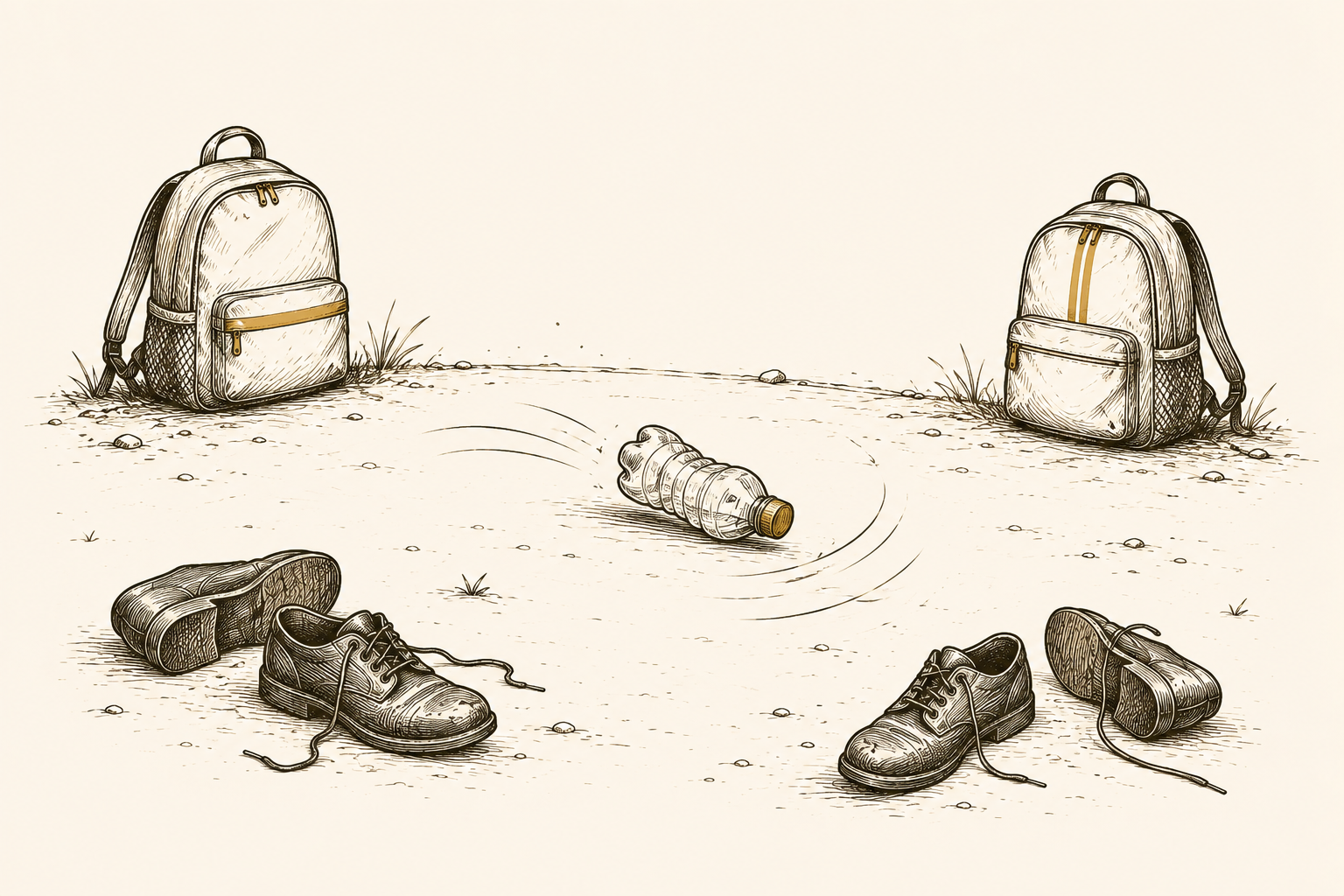
We loved scoring. I remember how we'd brag about goals — it felt amazing. Winning was an incredible high. But playing was more important than scoring. That's why nothing could stop us.
What happens when people grow up and start building businesses? They put the goal — the score — at the center, not the game itself. When there's no goal, it feels like the game isn't worth playing. You stop enjoying the process, and circumstances start stopping you: no budget, no team, no perfect moment. When as a kid, no goals, no ball, no shoes were never a reason not to play.
The game is worth playing whether you score today or not. Fall in love with playing.
Bottom Line
Every result you have is a consequence of the daily decisions you make. Being broke or ineffective isn't one bad decision — it's daily bad decisions stacked up. To break through, you don't change the goal. You change the way of being. Change the approach, the set of thoughts, the set of beliefs. That leads to different actions — because you stop doing the thing that wasn't working and start doing something else.
What's the point of changing employees if you haven't changed the head of the person doing the hiring? What's the point of dieting if you haven't changed your relationship with food? What's the point of new relationships if you haven't changed how you choose people?
The question isn't "how do I 10x." The question is: are you trying to squeeze $15,000 out of the same coffee stand — or are you ready to open a different business?
What's Next
I'm preparing something I've never done before. Bigger than any course, any mentorship, any program I've launched in 18 years. An idea that could change the rules for experts who are already working hard but are hitting the ceiling of their model.
Not ready to share details yet. But if you feel stuck in the diminishing returns curve, if everything in this article landed — and you want to be the first to know when I'm ready to talk about it, fill out a short form. Two minutes. No strings attached — just so I know you're interested.
Frequently Asked Questions
Why can't I 10x my income by working harder?
Because 10x requires a fundamentally different activity, not more of the same. The diminishing returns curve shows this clearly: 10 units of energy yield 1,000, but 50 units yield only 1,400. Your brain calculates this faster than you do, and stops giving you energy for a game it knows you'll lose.
What is the "dog on a nail" syndrome?
It's a state where you're uncomfortable enough to complain but not uncomfortable enough to change. Most entrepreneurs hit $2–3k a month, cover their basic needs, and lose their main motivator — the fear of not having enough. That's when momentum stops.
How do I find the "different action" that produces 10x?
The answer doesn't come from the same level of thinking that created the problem. Your environment is the key — people who already have what you want. Their model, applied to your context, gives you the business plan.
Is burnout the same as brain sabotage?
Often, yes. Your brain doesn't withhold energy because it's tired — it withholds energy because it already knows this approach won't work. It refuses to repeat an action with a known outcome.
Can you 10x in the same niche?
Yes — but with different actions. I sold my PlayStation club, came back two years later, and grew it 3x. Same business, same walls. But a different me inside. The ceiling was never in the business.

Choose your next step
5-day game for experts — from zero to first $1,500
Start free →5 days — how to use AI in practice as an expert and entrepreneur
Learn more →Practical program: from chaos to a managed client flow and stable income
Learn more →Closed international community — the environment where scale becomes a habit
Apply →I'm about to share something I've never done before
Bigger than a course or mentorship. Fill out the form to be the first to know.
Fill out the form